

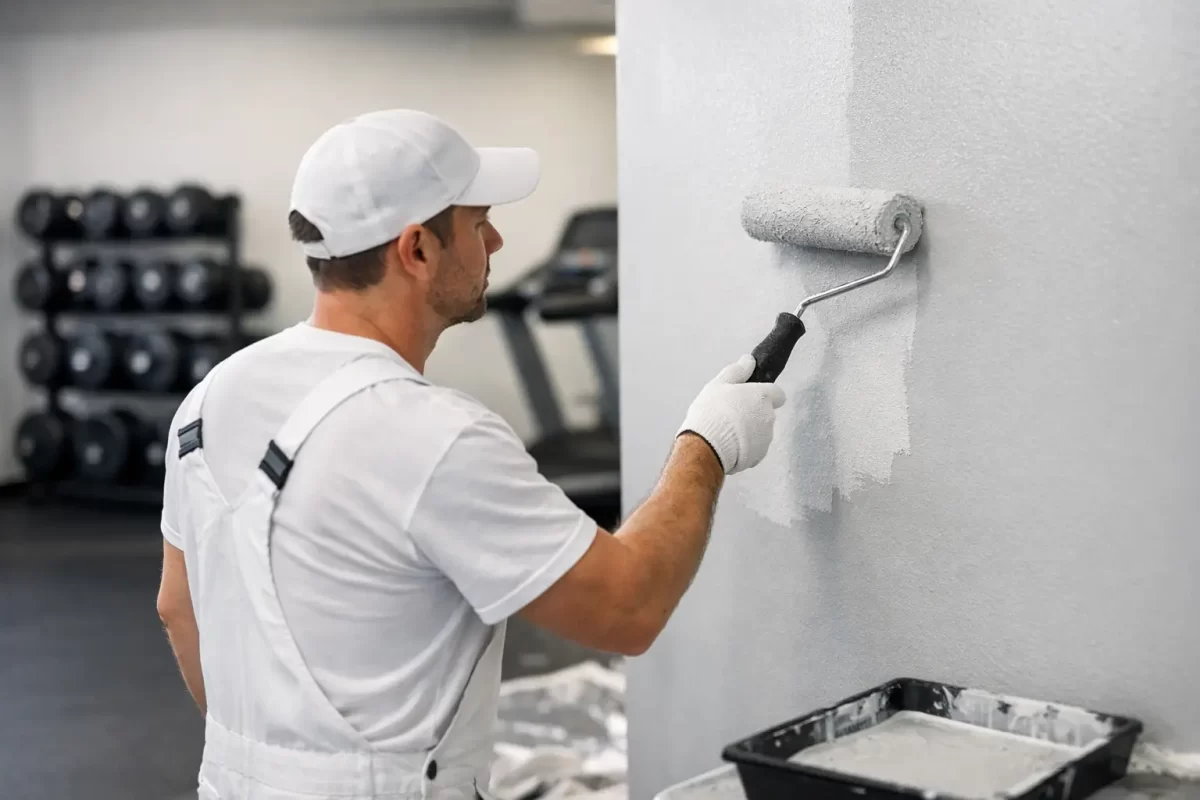
A gym copes with more punishment in a week than many interiors see in a year. Weights clip walls, sweat settles into surfaces, cleaning is constant, and every mark shows under bright lighting. That is why painting gyms is not simply about making the space look better. It is about choosing the right preparation, the right coatings, and the right finish for a high-traffic environment that needs to stay presentable.
For gym owners and facility managers, the paintwork does more than cover walls. It affects first impressions, day-to-day maintenance, and how well the space stands up over time. A clean, well-finished gym feels better to train in. It also signals that the business is run properly, which matters whether you manage a boutique studio, a school gymnasium, or a larger commercial fitness centre.
Why painting gyms needs a different approach
A gym is not an ordinary commercial interior. In most cases, surfaces deal with repeated contact, fluctuating moisture, scuffing from equipment, and strong overhead light that highlights every defect. If the wall preparation is poor or the wrong paint system is used, the finish can start looking tired far too quickly.
This is where experience matters. A good-looking result depends on more than applying fresh paint. Walls may need patching, plaster repairs, sanding, stain treatment, or primer suited to the existing substrate. In older facilities, there can also be issues with peeling coatings, impact damage, or uneven surfaces that need attention before any topcoat goes on.
The practical question is not just what colour to choose. It is how the paint system will perform after months of use, cleaning, and wear.
The main challenges in painting gyms
The biggest challenge is durability. Gym walls, ceilings, change rooms, reception areas, and training zones all have different demands, and a one-size-fits-all approach rarely gives the best result.
In weight areas and functional training spaces, impact resistance matters. These zones often cop bumps from bars, benches, racks, and moved equipment. A finish that looks excellent on day one but marks too easily can become a maintenance issue almost straight away.
In cardio zones and group fitness rooms, appearance and atmosphere tend to matter more, but durability is still essential. These areas usually need a finish that is easy to clean and holds its colour and sheen under regular lighting.
Bathrooms, amenities, and shower areas bring moisture and cleaning chemicals into the picture. Here, surface preparation and product choice are especially important. If the substrate is not properly sealed or repaired, problems can show up early.
Then there is scheduling. Many gyms cannot afford lengthy disruption. Work often needs to be planned around trading hours, staged in sections, or completed with minimal interruption to members and staff.
Surface preparation sets the standard
Most disappointing paint jobs fail before the first topcoat is even applied. If a gym has dents, cracks, flaking paint, or plaster issues, these need to be addressed properly. Painting over damage only hides it briefly.
Preparation usually includes cleaning down surfaces, removing loose material, filling and sanding damaged areas, sealing stains, and applying the right undercoats. In a gym setting, this stage is especially important because lighting is often bright and direct. That makes imperfections more obvious.
Where there is repeated wall contact, it can also be worth considering extra protection in vulnerable areas. The right system may involve tougher finishes or strategic planning around high-impact sections rather than treating every wall identically. That can be a smarter investment than repainting too often.
Choosing the right finish for a gym environment
When painting gyms, the best finish depends on how the room is used. There is always a balance between appearance, washability, and how well a coating handles wear.
Low-sheen and washable finishes are often a practical choice for main wall areas because they help reduce the visibility of minor imperfections while still allowing for regular cleaning. Flat finishes can look good in some spaces, but they are not always ideal where walls are touched often or need frequent wipe-downs.
Higher-sheen coatings can offer better washability in some settings, though they also tend to show more surface defects. That is why preparation and product selection need to work together. A harder wearing finish is only as good as the surface beneath it.
Ceilings are another area where shortcuts can stand out. In large open gym spaces, ceiling marks, patchiness, or roller lines are easy to spot. A clean, even finish overhead helps the whole interior feel brighter and more professional.
Colour matters more than many owners expect
Colour choice affects more than style. It shapes how spacious, clean, and energised a gym feels.
Dark feature walls can work well in strength zones or boutique studios where a more dramatic atmosphere suits the brand. Lighter neutrals often help reception areas, corridors, and general training spaces feel cleaner and more open. If natural light is limited, the wrong colour can make the room feel flat or closed in.
There is also a practical side to colour selection. Very light walls can show marks quickly in high-contact areas, while very dark colours may reveal dust, scuffs, and uneven finishing more than expected. In many gyms, mid-tone neutrals with well-placed feature colours strike the best balance between presentation and maintenance.
This is often where professional guidance helps. What looks good on a sample card does not always behave the same way across a full wall under gym lighting.
Minimising disruption during gym repainting
For operating businesses, timing is often just as important as finish quality. Gym owners need work completed safely, cleanly, and with as little interruption as possible.
A well-planned painting project should consider access, ventilation, drying times, and the movement of staff and members through the space. In some cases, works can be staged after hours or across selected zones. In others, it makes more sense to tackle reception first, then training areas, then amenities.
The right plan depends on the layout, the condition of the surfaces, and how the facility operates. A small studio has different needs from a multi-zone fitness centre. That is why clear communication before the job starts makes such a difference. It allows expectations, timelines, and site requirements to be sorted properly from the outset.
When a fresh coat is not enough
Sometimes the issue is not tired colour. It is damaged plaster, poor previous workmanship, or surfaces that were never properly finished to begin with. In those cases, repainting alone will not deliver the result most owners want.
If walls have obvious dents, patchy repairs, peeling areas, or old water marks, those problems need to be fixed first. The same applies where there are cracks, surface movement, or uneven sections that become more obvious under fresh paint.
This is where a full-service approach is valuable. Painting and plastering often need to work hand in hand to achieve a result that looks good and lasts. Rushing through preparation to save time usually costs more later.
What to look for in a contractor for painting gyms
Not every painter is suited to gym environments. Commercial repainting in active spaces calls for more than basic paint application.
You want a contractor who understands surface preparation, can recommend suitable coatings for different zones, and takes care with cleanliness and scheduling. Respect for the site matters. So does clear advice. If a painter cannot explain why one finish suits a weight room and another suits a reception area, that is worth paying attention to.
For property owners on the Gold Coast and in Tweed, it also helps to work with a team that understands local conditions, especially where humidity and regular cleaning can affect product performance over time. Jag Painting Solutions approaches this sort of work with the same focus we bring to other commercial interiors – proper preparation, quality workmanship, and a finish designed for the way the space is actually used.
The long-term value of painting gyms properly
A gym does not need fancy paintwork. It needs paintwork that lasts, looks clean, and supports the overall impression of the business. Members notice when walls are marked, patchy, or peeling. They also notice when a space feels fresh, well-kept, and professionally presented.
Done properly, repainting can improve the look of the facility, reduce maintenance headaches, and help protect the underlying surfaces. Done cheaply, it often becomes a repeat expense sooner than expected.
The best results come from treating the project as more than a cosmetic update. When preparation is thorough, colours are chosen with care, and the finish matches the use of the space, a gym can keep looking sharp well after the painters have packed up. If you are planning work, start by asking not just how it will look when finished, but how it will perform six months later.


