

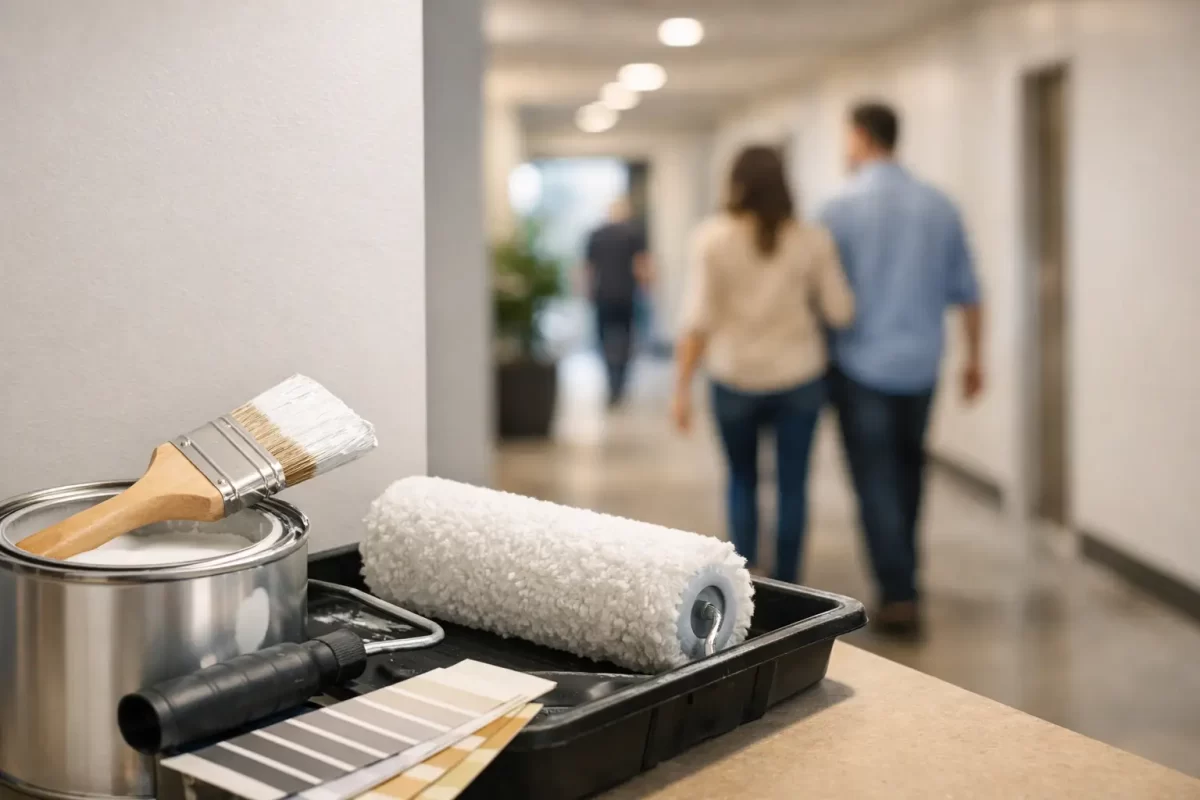
A hallway wall can tell the real story of a home. It collects school-bag scuffs, fingerprints near light switches, marks from moving furniture and the occasional muddy hand after a wet Gold Coast afternoon. Choosing the best paints for high traffic walls is less about finding the toughest-sounding tin and more about matching the coating, sheen and surface preparation to how the room is actually used.
For busy family homes, rental properties, offices, stairwells and retail spaces, the right interior paint keeps walls looking cared for between repaints. It should clean well without leaving shiny rubbed patches, resist everyday marks and hold its colour over time. A professional finish also begins below the paint, with sound plaster repairs, clean surfaces and the correct primer where needed.
What Makes a Wall Paint Suitable for Busy Areas?
High-traffic paint needs to handle both impact and cleaning. These are related but different qualities. A wall may resist a light knock yet still show damage after repeated wiping. Another paint may wash easily but be too glossy for a wall with uneven plastering or strong natural light.
Look for interior coatings described as washable, scrubbable or stain resistant. Quality acrylic paints are generally the practical choice for most residential and commercial interiors because they dry efficiently, have low odour options available and provide a durable, flexible finish. The better products also maintain their appearance after routine cleaning, rather than becoming patchy or losing their even sheen.
The paint system matters as much as the top coat. If the wall is chalky, damaged, stained or previously painted with an unknown finish, applying a premium top coat straight over it can still lead to poor adhesion. Proper preparation gives the new coating a stable surface to hold onto.
The Best Paints for High Traffic Walls by Finish
There is no single finish that suits every busy wall. The best choice depends on the condition of the wall, the room’s lighting and how often people touch or brush past it.
Low sheen: the reliable all-rounder
Low-sheen acrylic is often the best balance for hallways, living rooms, bedrooms, dining areas and common areas in offices. It has a soft, low-reflective appearance that hides minor wall imperfections better than glossier products, while still being considerably easier to clean than flat paint.
For most homes, a premium washable low sheen is the sensible starting point. It gives a refined look without making every plaster joint, dent or roller mark more visible. In a busy corridor or family room, it usually provides enough durability for regular wipe-downs when applied correctly.
Washable matt: for a quieter look
Modern washable matt paints have improved significantly. They are useful where a very low-reflective finish is preferred, especially on large walls with strong daylight or surfaces that are not perfectly smooth. A washable matt can reduce glare and give a more contemporary appearance than traditional low sheen.
There is a trade-off. Not every matt product is equally durable, and lower-grade matt paints may burnish when cleaned. Burnishing is the change in surface appearance that leaves a slightly shinier patch after rubbing. If matt is the preferred look in a high-use space, choose a premium product specifically rated for washability rather than a basic ceiling or flat wall paint.
Satin or semi-gloss: where walls receive constant contact
Satin and semi-gloss finishes offer stronger washability and are well suited to targeted areas that receive frequent handling. Think children’s play spaces, commercial corridors, school rooms, wash areas, kitchen splash zones outside tiled sections and walls beside frequently used doors.
The higher sheen makes dirt easier to wipe away, but it reflects more light. On a wall with dents, uneven patches or old repairs, this can make imperfections stand out. Satin is often a good compromise when extra durability is needed but a noticeably glossy look is not wanted. Semi-gloss is best reserved for areas where cleaning performance takes priority over a soft wall finish.
Flat paint: use it selectively
Flat paint has a place, particularly on ceilings and in low-contact rooms where its non-reflective finish is valued. It is usually not the first choice for high-traffic walls. It can be difficult to clean without leaving marks, especially in lighter colours, and frequent touch-ups may appear different once dry.
If a flat-looking finish is essential, a premium washable matt is generally the safer option for a wall that will receive regular attention.
Match the Paint to the Room, Not Just the Colour
A good paint choice changes from one part of a property to another. A pale low sheen may work beautifully in a formal lounge but be less forgiving beside the front door, where hands, umbrellas and bags regularly pass by.
In hallways and stairwells, washable low sheen is a dependable choice. These spaces often have limited room to move furniture and are prone to rubbing at shoulder height and along corners. In homes with young children or pets, consider a tougher washable product through the entry, family room and passageways.
Kitchens need a coating that tolerates cleaning and occasional moisture, particularly around handles, bins and dining areas. Good ventilation still matters. Paint is not a substitute for a tiled splashback or suitable wet-area lining where water exposure is constant.
Commercial spaces have different pressures. Reception areas, offices, shops and medical rooms benefit from paint that can be cleaned regularly without looking tired. The right finish should also support the intended atmosphere. A glossy wall may be practical, but it may not suit a calm waiting area or a premium retail fit-out.
Colour Can Make Maintenance Easier
Colour does not make paint more durable, but it can influence how easily marks show. Crisp whites are popular and can make an interior feel clean and open, yet they reveal scuffs quickly in entries and corridors. Very dark colours can hide some marks but may show dust, rub marks and uneven touch-ups.
Mid-tone neutrals, soft greys, warm beiges, muted greens and deeper feature colours can be practical in the right location. The aim is not to choose a colour that hides neglect. It is to select a finish that remains presentable between cleans while still fitting the character of the property.
Before committing, view colour samples on the actual wall at different times of day. Gold Coast light can be bright and change the way both colour and sheen read across a room. A colour consultation can help narrow down options that work with the home’s light, flooring and existing finishes.
Preparation Is What Protects the Finish
Even the best paint cannot disguise a poorly prepared wall for long. High-traffic areas need special attention because small flaws tend to become more obvious once the wall is knocked, cleaned or viewed under angled light.
Walls should be cleaned to remove grease, hand oils, dust and residue. Loose or flaking paint must be removed, and cracks, dents and old fixings should be properly filled and sanded. Glossy existing paint may need sanding to provide a key for the new coating. Stains from water, smoke, crayons or tannin can require a stain-blocking primer so they do not migrate through fresh paint.
Fresh plasterboard repairs and bare plaster also need the appropriate sealer or primer. Skipping this stage can result in uneven suction, flashing and inconsistent sheen. Flashing is when certain patches look different from the rest of the wall, often becoming visible in sunlight or at night under downlights.
For busy walls, two full coats of a quality top coat are usually needed for consistent coverage and durability. One heavy coat is not a replacement for two properly applied coats. It can affect drying, coverage and the final appearance.
Keep High-Traffic Walls Looking Their Best
Once painted, allow the coating to cure before washing it. Paint can feel dry within hours but takes longer to reach its intended hardness. The product instructions will give a guide, and cure times can vary with temperature, humidity and ventilation.
When cleaning is needed, start gently with a soft cloth or non-abrasive sponge, warm water and mild detergent. Avoid harsh scourers and strong chemical cleaners unless the paint manufacturer confirms they are suitable. Aggressive scrubbing can damage any painted surface, including premium coatings.
Address marks early where possible. Fresh fingerprints and scuffs are generally easier to remove than old grime. Keep a small labelled amount of leftover paint for future touch-ups, but remember that touch-ups can show on older walls because of natural ageing, sun exposure and changes in sheen. On a large, visible wall, repainting from corner to corner may produce the more even result.
When Professional Advice Is Worth It
The finish choice becomes more important when walls are damaged, the building has moisture concerns, surfaces have been painted many times, or a commercial property needs a hard-wearing result with minimal disruption. These are the situations where product selection and preparation should be planned together rather than decided at the paint counter.
Jag Painting Solutions helps property owners across the Gold Coast and Tweed choose finishes that suit the room, the existing surfaces and the level of day-to-day use. Experienced tradesmen can identify what needs repairing, priming or sealing before the final coats go on, which is where a long-lasting finish is won or lost.
A wall in a busy home or workplace will always collect a few signs of life. The right paint system simply means those signs are easier to manage, and the space continues to look clean, well finished and cared for long after the brushes are packed away.


