

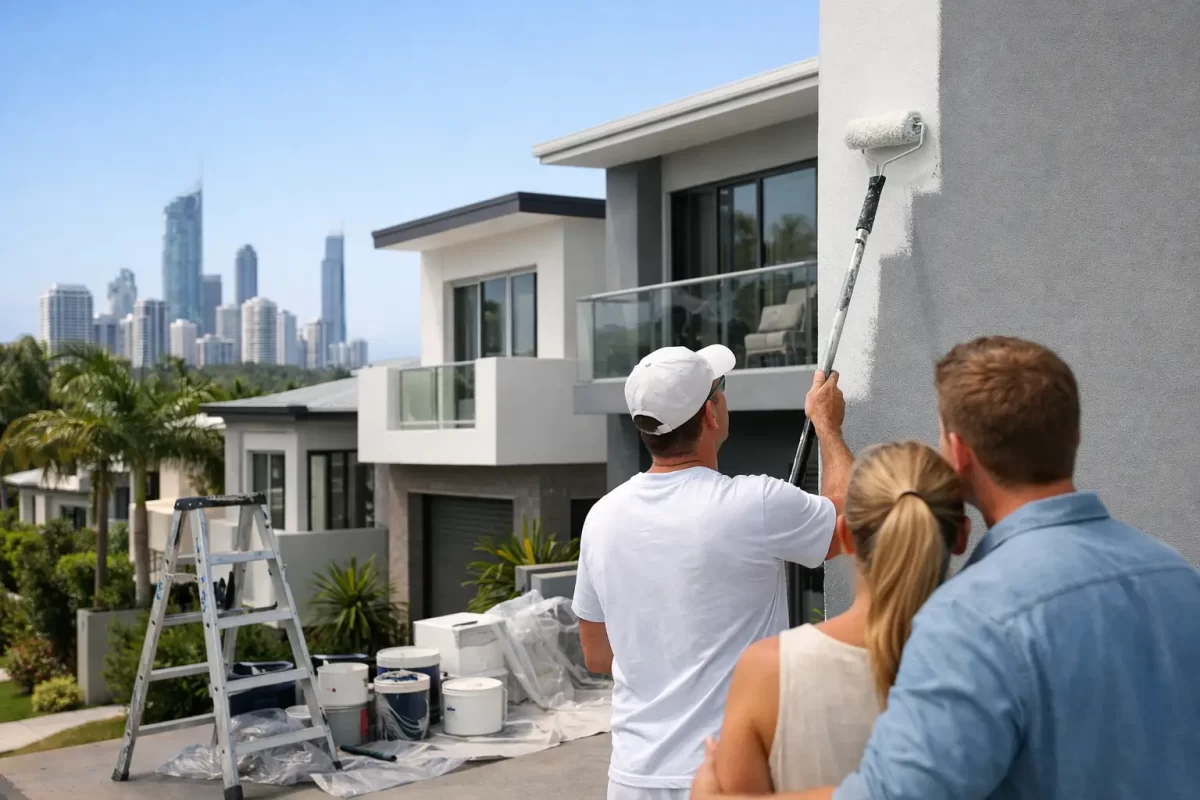
A Gold Coast townhouse repaint is rarely as simple as choosing a fresh wall colour and booking a painter. Townhouses often sit within a body corporate arrangement, share boundary walls or accessways, and have exterior finishes exposed to strong sun, salt air and driving rain. A well-planned repaint protects the building, lifts its presentation and avoids the frustrating surprises that can slow a project down.
For owners and renovators, the best result comes from treating painting as a finishing system rather than a quick cosmetic fix. That means confirming approvals, repairing the surface properly, selecting suitable products and giving the work enough time for careful preparation.
Start with body corporate requirements
If your townhouse is part of a complex, the first question is whether the work affects common property. Interior painting inside your lot is usually straightforward, but exterior walls, balcony ceilings, fences, entry doors, garage doors and visible trim may be subject to body corporate rules.
Check the by-laws and speak with the committee or strata manager before settling on colours or dates. Some schemes have an approved palette to maintain a consistent appearance, while others require written approval for any external change. Even where the colour is staying the same, access equipment, parking arrangements and work hours may need to be agreed on.
This step is worth doing early. Ordering paint or organising trades before approval can create unnecessary delays, particularly when a committee only meets monthly. A clear scope also helps neighbours understand what is happening, when painters will be on site and whether access near shared areas will be affected.
Assess the surfaces before choosing paint
A townhouse can have very different painting needs from one elevation to the next. The sunny western side may show faded colour and brittle coatings, while shaded walls can develop mould or mildew. Balconies, rendered surfaces, timber trim and metal railings each need the right preparation and coating system.
A professional inspection looks beyond the visible colour. Peeling paint, fine render cracks, chalky surfaces, water staining and soft timber can all affect adhesion and the final appearance. Painting over these issues may make the home look better for a short time, but the coating is unlikely to hold up as it should.
Common exterior issues on the Gold Coast
Coastal conditions can be hard on exterior finishes. UV exposure gradually breaks down paint films, and salt-laden air can contribute to corrosion on metalwork. Humidity also gives mould a foothold where walls receive little sun or have limited airflow.
The solution depends on the issue. Mould needs to be treated and removed rather than simply painted over. Cracked render may require patching and priming. Rust on railings or metal balustrades needs thorough preparation before a suitable protective coating is applied. Where moisture is entering through a failed sealant joint or damaged flashing, that building issue should be addressed before painting begins.
Plan access, protection and daily living
Townhouses can be tight sites. Shared driveways, narrow side passages, limited visitor parking and neighbouring courtyards all influence how the work is carried out. Good planning keeps the project moving while respecting the people living around it.
Before work starts, discuss where vehicles, materials and equipment will be placed. If ladders, scaffolding or elevated access are needed, there should be a clear plan for safe set-up and pedestrian access. Exterior work may also need to be staged around weather conditions, especially during wet or humid periods.
Inside, protecting flooring, furniture, benchtops and personal belongings matters just as much as the paint itself. A careful team will prepare rooms properly, cover fixed items and leave the work area tidy at the end of the day. For occupied homes, it can also help to paint one zone at a time so you are not living through the entire project at once.
Choose colours that suit the townhouse and complex
Colour selection is where many townhouse repaints either look considered or feel out of place. The right choice should work with the roof, paving, window frames, brickwork and neighbouring properties, not compete with them.
For an exterior repaint, lighter colours can reduce heat absorption and often suit the bright Gold Coast environment. However, very light finishes can show dirt more readily in busy common areas. Dark colours can create a striking contrast on doors, trims or feature sections, but they may fade faster in full sun and can make a small façade feel heavier. There is always a balance between appearance, maintenance and the rules of the complex.
Indoors, a consistent neutral base can make a townhouse feel larger and easier to update over time. Warm whites, soft greys and muted natural tones work well with many flooring and furnishing styles. Feature colours can add personality in a living area, stairwell or bedroom, but samples should be viewed on the actual wall in morning, afternoon and artificial light before making a final decision.
A colour consultation can be particularly useful when the repaint forms part of a renovation. It helps bring new cabinetry, tiles or flooring together with the existing fixed elements that are staying.
Preparation determines the quality of the finish
The final coat is what everyone sees, but preparation is what makes it last. Rushed preparation often shows up as uneven texture, visible patching, poor adhesion or paint failure around doors, windows and high-traffic areas.
A thorough townhouse repaint typically includes:
- cleaning surfaces to remove dirt, mould, grease and chalky residue
- scraping loose or flaking paint, then sanding for a sound, even base
- filling dents, cracks and minor surface imperfections where appropriate
- repairing or patching plaster and render before priming affected areas
- masking and protecting fixtures, floors, glazing and surrounding surfaces
Not every wall needs the same level of repair. A recently painted interior may only require minor filling and spot priming, while an older exterior can need more detailed restoration. An honest quote should reflect the condition of the surfaces and explain what preparation is included.
Allow for the right products and timing
Quality paint is only part of the equation. The correct product needs to be matched to the surface, location and level of exposure. Exterior coatings need to withstand weather, while wet areas require finishes that cope with moisture and regular cleaning. High-use internal areas, such as hallways and stairwells, benefit from durable coatings that are easier to maintain.
Weather also matters. Paint should not be applied to damp surfaces or during unsuitable conditions, as drying and curing can be affected. A flexible schedule is sensible for exterior work, particularly during periods of regular rain. Trying to force a job through poor conditions is not a shortcut worth taking.
Know what to expect from a detailed quote
A repaint quote should give you confidence about the scope, not leave you guessing. It should identify the areas being painted, the preparation work involved, the number of coats where relevant and whether materials are included. If access is difficult or specialist equipment may be required, that should be clear from the beginning.
It is also helpful to ask how unexpected issues will be handled. Once old paint is removed, hidden damage or more extensive surface deterioration can occasionally be uncovered. Clear communication at that point allows you to make an informed decision before additional work proceeds.
For townhouse owners preparing to sell or renovate, the cheapest option can become expensive if the finish fails early or repairs are skipped. The better value is workmanship that improves the look of the property while giving the surfaces the protection they need.
A repaint that feels looked after
A townhouse should still feel like home while work is underway. That comes down to reliable scheduling, respectful tradespeople, tidy work practices and straightforward communication from the first inspection through to the final walkthrough.
Jag Painting Solutions approaches townhouse projects with that level of care, whether the job is a single interior refresh, exterior maintenance or a full repaint around a renovation. Start with a clear assessment of your surfaces and approval requirements, then request a detailed quote that suits the way you live in and look after your property.


