

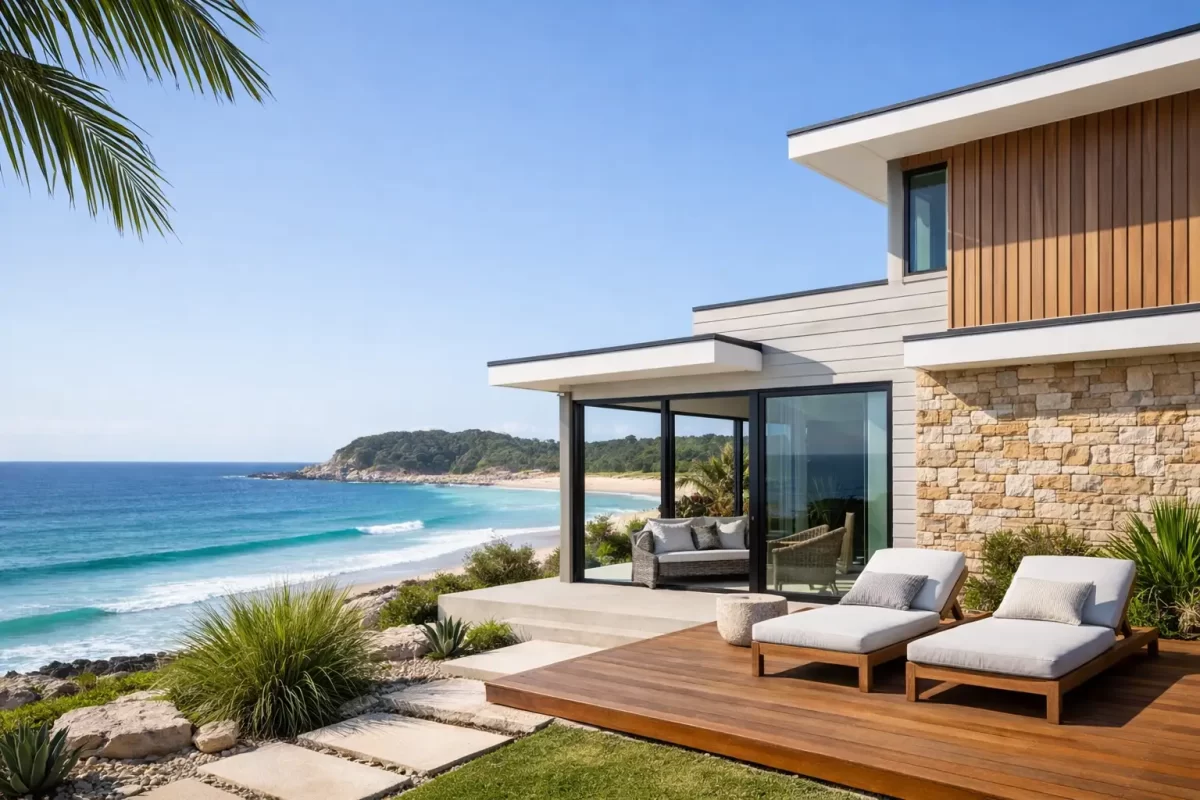
Salt does not need to be visible on a wall to cause trouble. On coastal properties, fine airborne salt settles on paintwork, metalwork, windows and timber, then combines with humidity, rain and strong UV exposure. Choosing the best exterior finishes for coastal homes is therefore about more than picking an attractive colour. It is about selecting a complete system that suits the surface, holds up to the local conditions and can be maintained without constant repairs.
For homes across the Gold Coast and Tweed, the right finish protects the building while keeping it looking cared for. The wrong one can chalk, peel, crack, fade or allow moisture to work its way beneath the coating far sooner than expected.
Best exterior finishes for coastal homes start with the surface
There is no single exterior coating that is best for every coastal property. A finish that performs well on rendered masonry may not be suitable for weatherboards, and a product designed for metal will not protect timber. The condition of the existing surface matters just as much as the material itself.
Before any finish is chosen, the surface needs to be checked for loose paint, chalking, rust, cracks, damp areas, mould and failed sealant. Coastal homes often have more than one of these issues at once, particularly on the sides facing prevailing weather.
Preparation is where a long-lasting paint job is won or lost. Salt, dirt and powdery old paint must be removed properly. Cracks need flexible filling, bare areas require the right primer, and surfaces must be dry before coating begins. Painting over a tired or contaminated surface may look good for a short time, but it will not deliver the protection a coastal home needs.
Exterior acrylic paint for masonry and render
For painted brick, fibre cement, render and masonry, a premium exterior acrylic coating is usually the practical choice. Quality acrylic paints are formulated to handle movement, moisture and harsh sunlight better than basic exterior paints. They offer strong colour retention and are easier to wash down as part of regular coastal maintenance.
A low-sheen finish is often a sensible option for rendered walls. It provides a clean, modern appearance while hiding minor surface imperfections better than a higher sheen. Flat finishes can look elegant, but they tend to mark more easily and may be harder to clean. Semi-gloss is durable and washable, though it can highlight uneven render, patching or hairline defects.
On newer render, allow proper curing time before painting. On older render, investigate any cracking rather than simply coating over it. Fine hairline cracks may be addressed with suitable preparation and a flexible coating system, while larger cracks can point to movement or substrate problems that need attention first.
When elastomeric coatings are worth considering
Elastomeric masonry coatings are thicker and more flexible than standard exterior paint. They can be a worthwhile option for rendered homes with recurring hairline cracking or exposed walls that face hard weather. Their flexibility helps bridge minor movement and can improve water resistance when applied as part of the correct system.
The trade-off is that elastomeric coatings need careful application and suitable conditions. They are not a shortcut for damp walls, major cracks or failed render. If moisture is already trapped behind the surface, applying a highly protective coating can make the underlying issue harder to resolve.
Weatherboards and timber need breathable protection
Timber moves with changes in temperature and moisture. On a coastal home, that movement is often increased by humidity, rain and prolonged sun exposure. The finish must be able to cope with this movement while protecting exposed timber from water entry and UV damage.
For painted weatherboards, exterior acrylic paint over a quality timber primer is a dependable system. Attention to end grain, joints, nail holes and cut edges is especially important, as these are common points for water to enter. Caulking should be flexible and paintable, not a hard filler that will split as the timber expands and contracts.
For natural timber features, an exterior stain or oil can preserve the grain and create a warmer look. This finish is popular for screens, decks, cladding and feature posts, but it requires realistic maintenance expectations. Clear and lightly pigmented finishes generally need more frequent recoating than opaque paint, especially on north- or west-facing areas.
A pigmented stain provides better UV defence than a clear coating because the pigment helps shield the timber from sunlight. Even then, timber exposed to salt air and direct weather should be inspected regularly. If the coating begins to wear thin, recoat before the timber turns grey, splits or absorbs excessive moisture.
Metal finishes must address corrosion first
Metal fences, balustrades, roofing components, gates and steel posts are especially vulnerable near the coast. Once corrosion begins under a coating, painting over the top will not stop it. Rust needs to be removed or treated correctly, then the bare metal must be primed with a compatible anti-corrosive primer before topcoats are applied.
For steel and wrought iron, a quality exterior metal paint system provides the required barrier against moisture and salt. Preparation may include scraping, sanding, mechanical abrasion or rust treatment, depending on the extent of corrosion. Areas around welds, joints, fasteners and the bottom of gates deserve close attention because water commonly sits there.
Aluminium needs a different approach. It does not rust like steel, but it can oxidise and lose adhesion if incorrectly prepared. Thorough cleaning, suitable abrasion where required and a primer designed for aluminium are essential before topcoating.
For coastal metalwork, darker colours can look sharp but may become hotter in full sun. Heat can contribute to coating stress and make some surfaces uncomfortable to touch. This does not rule out dark colours, but it is worth discussing colour placement and finish selection before committing.
The right sheen protects more than appearance
Paint sheen affects how a home looks, how easily it cleans and how well it disguises imperfections. For most coastal homes, a balanced approach works best: low sheen on broad wall areas, with semi-gloss or gloss on trims, doors and other high-contact surfaces.
Higher-sheen paints generally form a tougher, more washable surface, which is useful for fascias, doors, window trims and handrails. They also make architectural details stand out. However, gloss reflects light strongly and will reveal poor preparation, brush marks and uneven substrate conditions.
Light and mid-tone colours are often easier to live with in exposed coastal locations. They tend to absorb less heat and can disguise salt residue and fading better than very dark shades. That said, the best colour is one that suits the home, roof, surrounding landscape and maintenance expectations. A considered colour consultation can prevent expensive changes after the work is complete.
Don’t overlook rooflines, eaves and exposed details
Coastal damage often begins in places that are easy to miss from ground level. Eaves, fascias, soffits, pergolas, external ceilings and window sills can collect moisture and salt while receiving less routine cleaning than main walls. A sound exterior finish includes these details, not just the most visible elevations.
Particular care is needed where different materials meet, such as timber trim against render, metal flashings against cladding or sealant joints around windows. These transitions are common entry points for water. Quality preparation, compatible primers and correctly applied sealants give the topcoat a far better chance of lasting.
Maintenance keeps coastal finishes working
Even premium coatings benefit from regular care. A gentle wash with fresh water removes salt build-up before it has time to dull paint, encourage corrosion or hold moisture against the surface. This is particularly valuable after periods of strong onshore winds or storms.
Avoid blasting exterior paintwork at close range with a high-pressure cleaner, as it can force water behind coatings or damage weakened areas. Instead, use a soft brush or low-pressure wash where appropriate, then inspect for peeling, cracking, rust spots, mould and deteriorating sealant.
A practical coastal maintenance routine includes checking the exterior at least once a year, with closer attention to weather-facing walls and exposed timber or metal. Small repairs completed early are simpler and more affordable than repainting after widespread coating failure.
Choose a finish system, not just a paint colour
The best result comes from matching the coating system to the material, exposure level and condition of the home. A premium topcoat matters, but it cannot compensate for poor preparation, unsuitable primers or neglected repairs. Coastal properties ask more of every painted surface, so workmanship and product compatibility should guide the decision.
If your exterior is showing chalking, peeling paint, rust or fading after a few tough summers, it is a good time to have the surfaces assessed before the damage spreads. Jag Painting Solutions can help Gold Coast and Tweed property owners choose practical exterior finishes that protect the home and suit its style, with careful preparation and a clear, professional finish from start to finish.


