

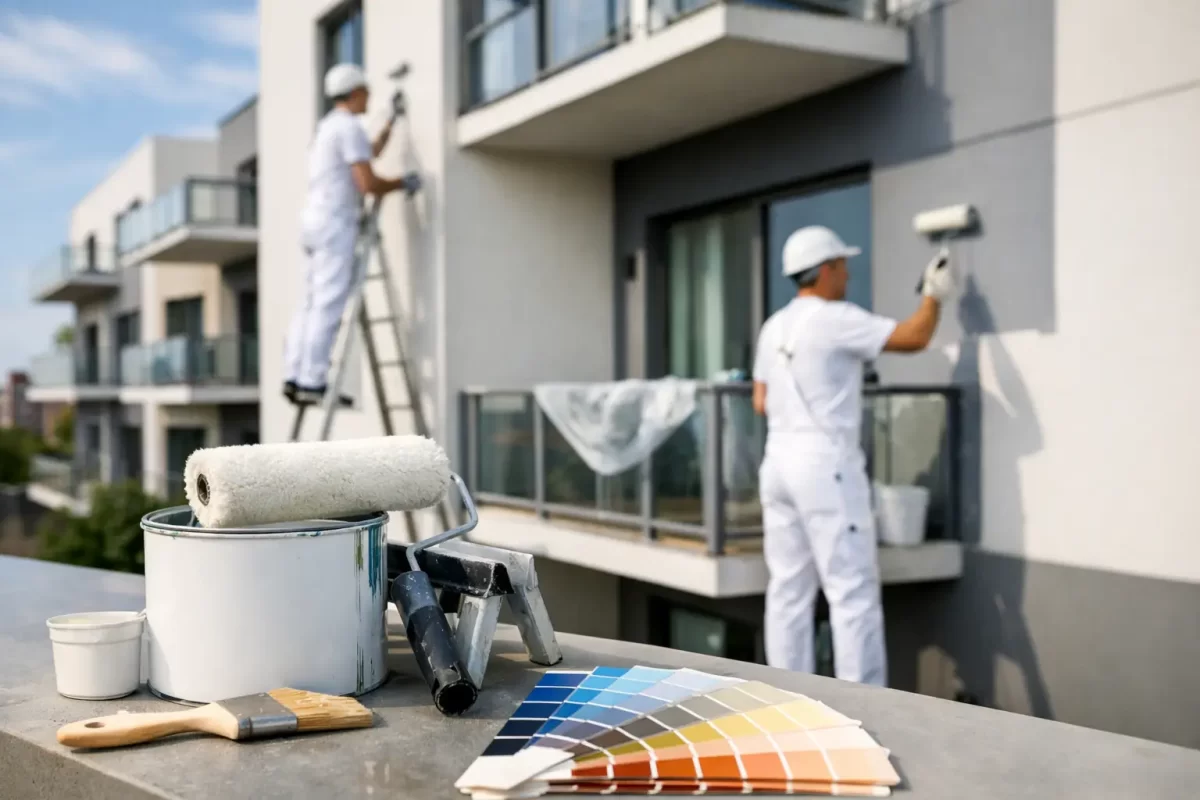
A body corporate painting guide should start well before colours are selected or painters arrive on site. In a shared property, the job affects residents, owners, tenants, visitors and the long-term presentation of the building. A clear plan helps the committee protect the property, control disruption and achieve a finish that stands up to the Gold Coast climate.
Whether the work covers a small townhouse complex, apartment building, retail frontage or shared common areas, painting is a maintenance decision as much as an appearance upgrade. The best results come from defining the scope properly, allowing for surface repairs and choosing an experienced team that communicates clearly from start to finish.
Start with a clear painting scope
The first question is not simply, “What colour should we use?” It is, “What needs painting, repairing and protecting?” A body corporate scope should identify every relevant surface, including exterior walls, soffits, eaves, balustrades, stairwells, common hallways, doors, fences, car parks and line markings where required.
Walk the property with the committee or building manager and document visible issues. Peeling coatings, hairline cracks, chalky paint, rust, water staining, mould and failed sealant all need attention before new paint is applied. Painting over these problems may improve the look for a short time, but it will not provide the durable result the property needs.
It also helps to separate essential maintenance from optional improvements. For example, repairing damaged render and repainting external elevations may be urgent, while updating feature colours in an entry foyer can be planned as a separate stage. This gives the committee a practical basis for prioritising works and managing the budget.
Plan for the building, not just the paint
Every complex has different access requirements, resident routines and risks. A low-rise townhouse site may allow painters to work in sections with minimal interruption. A multi-level building may need scaffolding, elevated work platforms, safety controls and more detailed scheduling. The painting approach should suit the property rather than forcing the property to fit a standard process.
External painting on the Gold Coast also requires careful consideration of sun, humidity, salt air and seasonal rain. Coastal locations can place extra pressure on exterior coatings and metal surfaces. Preparation, product selection and correct application conditions all influence how well the finish performs over time.
A professional quote should make the proposed work easy to understand. It should outline the areas included, preparation methods, repairs allowed for, coating system, number of coats, access arrangements and any exclusions. If there are uncertain areas, such as concealed timber rot or extensive render failure, these should be identified upfront rather than left as a surprise once work begins.
Prepare surfaces properly
Most painting failures begin with poor preparation. A fresh topcoat cannot compensate for loose paint, moisture problems or an unclean surface. For body corporate projects, preparation often takes a significant part of the programme because the building has been exposed to years of weather, traffic and general wear.
Depending on the condition of the property, preparation may include washing down surfaces, treating mould, scraping and sanding loose coatings, filling cracks, patching plaster, repairing render, sealing stains, priming bare areas and treating rust. Exterior surfaces may also need pressure cleaning before any repairs or coatings are applied.
The right preparation depends on the substrate. Timber, masonry, plasterboard, metal and previously painted surfaces each need suitable products and methods. This is where experienced tradesmen add real value. They can identify whether a surface needs a sealer, primer, patch repair or more extensive remedial work before the finishing coats begin.
For committees, the key point is simple: do not compare quotes only by the final price or the number of litres of paint. Compare the preparation detail. A lower quote can become costly if it leaves out the work needed for the new finish to last.
Choose colours with maintenance in mind
Colour changes can refresh a complex, improve street appeal and make common areas feel cleaner and more welcoming. They should also work with the building’s architecture, surrounding properties and maintenance requirements.
Very dark exterior colours can absorb more heat, particularly on exposed walls. Light colours can look sharp and help reflect heat, but may show dirt or staining more readily in high-traffic areas. The right choice depends on the surface, orientation, surrounding landscaping and how the property is used.
A practical colour scheme often uses a main neutral tone with darker, more forgiving colours on doors, lower walls, handrails or areas likely to receive knocks and marks. Entry points can use a subtle feature colour to create a stronger first impression without making the entire building difficult to maintain.
Before approving a final scheme, view sample colours on the actual building. Light changes throughout the day, and a colour that looks right on a small sample card can appear very different across a large rendered wall. Colour consultation can help the committee make a confident decision that suits the property rather than following a short-lived trend.
Communicate clearly with residents
Painting works are easier when residents know what is happening, when it will happen and what they need to do. Advance communication is not an extra. It is part of running a respectful, well-organised project.
Residents should receive clear notice about work dates, expected hours, access requirements, parking changes, balcony restrictions and any need to keep windows closed. If painters need access to private courtyards, balconies or external walls near individual lots, those arrangements should be confirmed early.
A useful resident notice should cover at least these points:
- the work areas and expected sequence of works
- daily working hours and likely noise or odour impacts
- access, parking and safety restrictions
- contact details for project questions
- simple steps residents can take to protect outdoor furniture, vehicles and personal items.
No painting project is completely disruption-free, particularly where access equipment or external preparation is involved. However, a professional team can reduce inconvenience by keeping the site tidy, protecting surrounding surfaces, maintaining safe walkways and providing realistic updates if weather changes the programme.
Check safety, access and site protection
Body corporate painting often takes place around people going about their day. That makes site safety and protection essential. Walkways, entry points, gardens, vehicles and common facilities need to be considered before work starts.
The contractor should plan how ladders, scaffolding or elevated work platforms will be used, how public areas will be separated from the work zone and where equipment and materials will be stored. Drop sheets, masking and careful set-up protect windows, paving, landscaping and fixtures from overspray or paint splashes.
For internal common areas, the team should also consider how residents move through the building. Hallways, stairs and lift areas may need to be completed in stages so access remains practical. Low-odour products and sensible scheduling can be particularly helpful in enclosed spaces.
Inspect the work before sign-off
A final inspection gives the committee an opportunity to check that the completed work matches the agreed scope. It is best done in good natural light and, where possible, with the contractor present so any questions can be addressed promptly.
Look for consistent coverage, clean cut-in lines, even sheen, properly finished repairs and neat edges around windows, doors and fixtures. Check that common areas have been left clean and that temporary protections, rubbish and equipment have been removed. If touch-ups are needed, record them clearly and agree on a timeframe for completion.
It is also worth keeping records of the colour schedule, products used and the date of completion. These details make future maintenance, touch-ups and staged painting easier to manage. A well-kept maintenance record can save the next committee time and avoid guesswork.
When to stage a body corporate painting project
Not every property needs to be painted all at once. Staging can be a sensible option when budgets are limited, access is complex or the building has areas with different levels of deterioration. External elevations exposed to harsh weather may be the first priority, followed by internal common areas, fencing or secondary structures.
The trade-off is that staged work can mean repeat set-up costs and slight colour variation if products or batches change over time. Where possible, plan the full colour scheme and maintenance sequence from the beginning, even if the work is completed in stages.
A well-planned painting project does more than make a property look refreshed. It protects surfaces, supports property value and gives residents confidence that their shared asset is being cared for properly. For body corporates across the Gold Coast and Tweed, working with a skilled painting team that respects the site, communicates clearly and takes pride in preparation is a practical way to make the process easier from the first inspection to the final coat.


