

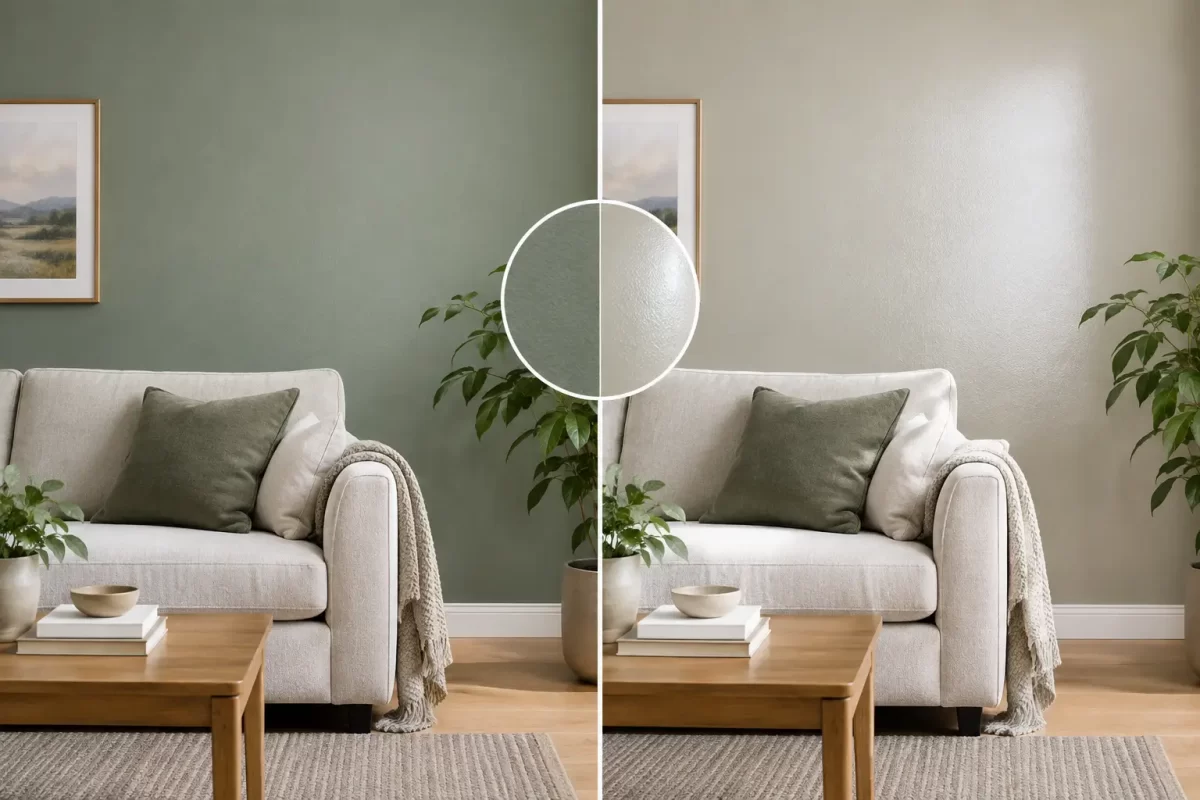
A wall can be painted in the perfect colour and still look wrong if the sheen does not suit the room. When choosing matte versus satin walls, the real question is not which finish is better overall. It is which one will look good, wear well and suit the way your household or business uses the space.
Sheen affects how paint reflects light, how easily it can be cleaned and how much attention it draws to the condition of the wall beneath it. On the Gold Coast, where bright natural light is common, that decision can make a noticeable difference from morning through to late afternoon.
Matte versus satin walls: the key difference
Matte paint has very little shine. It gives walls a soft, even appearance and absorbs rather than reflects light. Satin has a gentle, low-level sheen. It reflects more light than matte without looking glossy, creating a slightly smoother and more polished finish.
Neither option is simply a matter of appearance. A sheen level changes what the paint reveals. Satin is generally more washable and durable in busy areas, but its light reflection can make dents, patches and uneven plasterwork more visible. Matte is more forgiving on imperfect walls, yet may need more careful cleaning depending on the product selected.
The best choice starts with an honest look at the room, the surface condition and how the space is used every day.
When matte walls are the right choice
Matte is a popular choice for living rooms, bedrooms, dining areas and ceilings. It creates a calm, contemporary finish that works particularly well with soft neutrals, deep colours and spaces where you want the colour itself to do the work rather than the sheen.
Because it does not bounce light around the room, matte helps disguise minor surface inconsistencies. Older homes, renovated rooms with previous patching, and walls that receive strong side light from windows can all benefit from this forgiving quality. It is also a good option when a room has large walls that would otherwise show reflection lines.
Modern premium matte paints are more durable than older flat paints, and many can handle gentle wiping. Still, matte is not always the most practical finish for a hallway where children brush past walls, a busy entrance, or a kitchen wall exposed to regular splashes. Repeated scrubbing can burnish some matte finishes, leaving a slightly shinier patch.
Matte can be the smart choice if you value a refined, low-sheen look and the room has moderate traffic. It is especially effective where careful surface preparation has been completed but there are still minor imperfections that should not become a feature of the room.
Matte works well in these spaces
Bedrooms and formal living areas are natural candidates for matte paint. It also suits home theatres, studies and ceilings, where reflected light can be distracting. In commercial settings, it can work well in meeting rooms or low-traffic offices where a restrained, professional finish is wanted.
For darker feature walls, matte often gives a richer result. A satin finish can add highlights that alter the way a deep navy, charcoal or green appears across the wall. That is not necessarily a problem, but it should be a deliberate design choice.
When satin walls make more sense
Satin paint has a subtle sheen that provides extra resilience. It is generally easier to wipe clean than matte, making it a practical option for spaces that see fingerprints, bags, furniture movement and everyday knocks.
Hallways, entryways, kids’ rooms, kitchens, laundries and busy commercial areas often benefit from satin. It is also worth considering for stairwells, where hands commonly touch the wall and cleaning access can be awkward. In rental properties and family homes, the additional washability can make ongoing maintenance easier.
Satin reflects more light, so it can help a darker room feel a little brighter. In a narrow hallway or room with limited natural light, this slight reflectivity can be useful. However, a brighter appearance should not come at the expense of surface quality. Any ridges, rough patches, poorly repaired dents or roller marks are more likely to show with satin, particularly near windows and downlights.
This is where professional preparation matters. Proper plaster repairs, sanding, priming and application technique are essential before applying a satin finish. A quality paint job is not only about the final coat. The work underneath it determines how clean and consistent the finished wall looks.
Satin is not the same as glossy
Some homeowners avoid satin because they picture shiny walls. In reality, satin sits well below gloss and semi-gloss. It has enough sheen to be practical but can still look understated when applied well.
That said, sheen names can vary between paint ranges. One brand’s satin may look slightly different from another’s. Viewing a test patch in the room, at different times of day and under artificial light, is the safest way to judge the result before committing to an entire home or commercial space.
Surface condition should guide the decision
If a wall has visible plaster repairs, uneven texture or old paint build-up, matte will usually be more forgiving. Satin may still be suitable, but it leaves less room for shortcuts in preparation.
Strong light is another factor that catches people out. Light shining across a wall, rather than directly onto it, highlights texture and application marks. This is common near large windows, sliding doors and bright coastal-facing rooms. Even well-painted walls can show more variation in these conditions when a higher-sheen finish is used.
A skilled painter will assess the wall before recommending a finish. Sometimes the best answer is not changing the sheen, but improving the substrate first through patching, skimming or targeted plastering. Choosing satin over an uneven wall without addressing the surface can turn a minor issue into one you notice every day.
Think room by room, not house-wide
Using one sheen throughout the entire property can create a uniform look, but it is not always the most practical approach. It is common to use matte across main living spaces and bedrooms, then select satin for hard-working areas such as hallways, children’s rooms and laundries.
Kitchens require a little more consideration. If the walls are likely to receive cooking residue or regular cleaning, satin can be useful. Behind a cooktop, however, paint alone may not be enough protection. The right splashback solution remains important.
Bathrooms also need an appropriate paint system that can cope with moisture and condensation. Satin is often considered for its wipeability, but the product must be suitable for wet-area conditions and the room needs proper ventilation. The paint finish should work with the whole environment, not just look good on day one.
For commercial premises, consider the volume of traffic and the cleaning routine. A reception area, retail corridor or staff room may be better served by a washable satin finish, while a boardroom or low-contact office can look excellent in matte.
Colour changes the way sheen looks
The same finish can look different depending on the colour. Dark colours tend to show scuffs, fingerprints and surface variation more readily, especially in satin. They can look striking in matte but may still need careful handling in high-touch areas.
Very light colours are often more forgiving, although satin can create noticeable light reflection on broad pale walls. Warm whites, greiges and soft neutrals usually sit comfortably in either finish. The final choice comes down to the desired mood, practical use and wall condition.
Before painting a full room, test your chosen colour and sheen on a decent-sized section of wall. Look at it in daylight, at night with the lights on, and from different angles. A small paint card cannot show how sheen will behave across an entire wall.
Getting a finish that lasts
The best sheen choice can still disappoint if the preparation or application is rushed. Clean surfaces, sound plaster, correct primers and even coating technique are what create a professional result. This is particularly true with satin, where flaws are easier to see, but matte also needs careful application to avoid inconsistent coverage or touch-up marks.
If you are planning an interior repaint, renovation or commercial refresh, discuss how each room is used before selecting the paint finish. An experienced painter can help match the sheen to the surface, lighting and maintenance needs, rather than applying a one-size-fits-all recommendation.
A well-chosen finish should make daily life easier while helping your walls look their best. For practical advice tailored to your property, Jag Painting Solutions can assess the surfaces and help you choose a result you will be happy to live with for years.


