

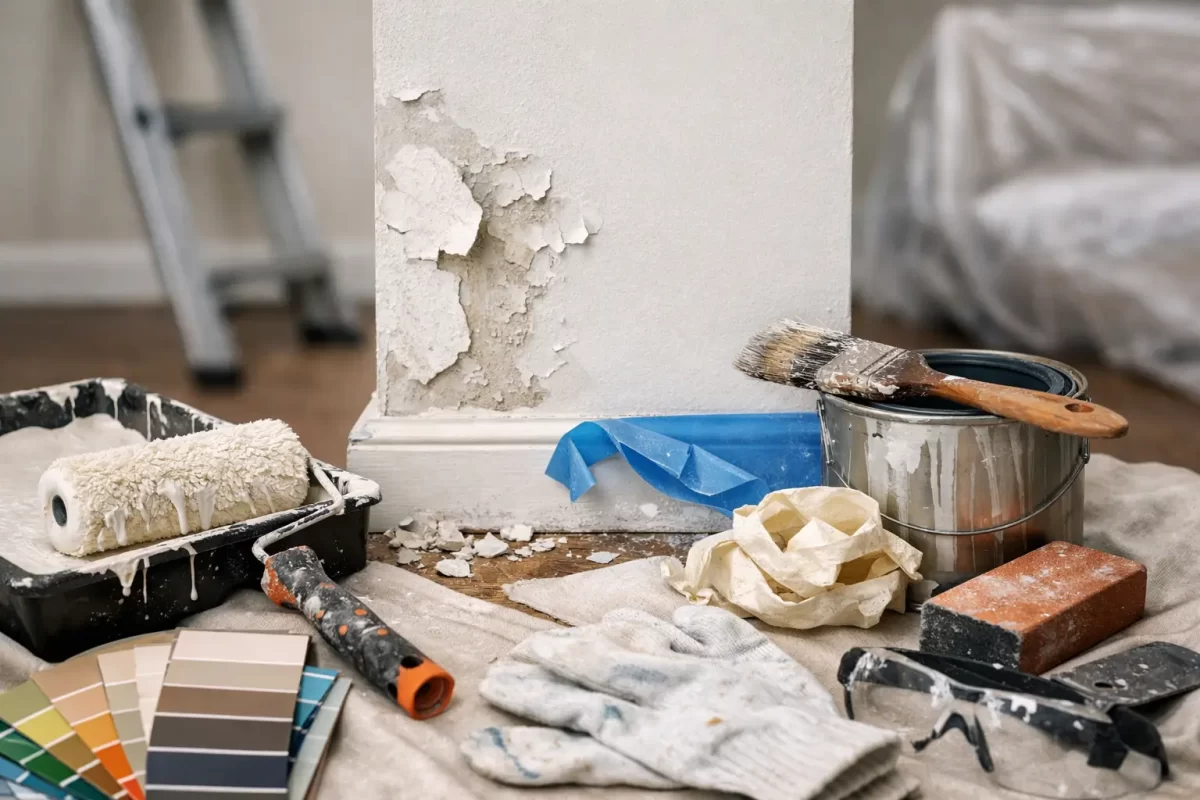
A fresh coat of paint can make a tired room, weathered exterior or dated commercial space look completely renewed. But the result is decided well before the first brush touches the wall. The most common mistakes to avoid before repainting are usually preparation shortcuts: painting over moisture, overlooking damaged plaster, choosing a colour too quickly, or starting before surfaces are properly clean and sound.
For Gold Coast properties, preparation deserves even more attention. Humidity, salt air near the coast, strong sun and seasonal rain can all affect how coatings dry, adhere and last. Taking the time to assess the job properly protects the finish you are paying for.
1. Painting Over a Problem Instead of Fixing It
Paint improves appearance, but it does not repair the cause of peeling, stains, cracks or bubbling. If a wall has water marks, for example, repainting it before identifying the leak may only hide the issue for a short time. The stain can return, and the new paint may fail as moisture continues to move through the surface.
The same applies to flaking external paint, mould, rust spots and cracked plaster. These are not simply cosmetic details. They can point to moisture exposure, failed sealants, movement in the substrate or inadequate previous preparation.
Before repainting, inspect walls, ceilings, eaves, doors and exterior cladding in good light. Look for loose material, discolouration, soft spots, fine cracks and areas where paint has lost adhesion. A professional painter can help determine whether the right solution is a minor repair, plastering work, mould treatment, sealing or a more substantial maintenance repair.
2. Skipping Cleaning Because the Surface Looks Fine
A wall can look clean while still carrying contaminants that interfere with paint adhesion. Interior surfaces often collect cooking residue, hand marks, cleaning product residue and dust. Outside, dirt, salt, mildew, chalky old paint and airborne grime are common, particularly on exposed Gold Coast homes.
Painting over contaminants can lead to patchy sheen, poor bonding and early peeling. It can also make a premium paint system perform like a budget one. Cleaning should suit the surface and the issue – a light wash may be enough for some interiors, while exterior areas may need thorough washing, mould treatment or more detailed preparation.
Allow surfaces to dry fully before any sanding, filling, priming or painting begins. This is especially important after wet weather or pressure cleaning. A surface that feels dry on top may still hold moisture underneath.
3. Underestimating Plaster Repairs and Surface Imperfections
Fresh paint draws attention to imperfections rather than disguising them. Small dents, poorly filled holes, lifted tape joins and uneven plaster may be easy to ignore on an old, flat wall. Once painted in a new colour, especially with light coming across the surface, they can become the first thing you notice.
Rushed patching is a common cause of disappointing interiors. Filler needs to be applied cleanly, allowed to dry, sanded smooth and sealed where required. Larger cracks or recurring movement need a more considered repair than simply filling over the top.
Texture also matters. A repaired section with a different surface profile can show through even after several coats. Where a wall has extensive damage or inconsistent previous repairs, skim coating or plastering may provide a cleaner starting point than trying to patch dozens of individual areas.
4. Using the Wrong Primer or Skipping It Entirely
Not every surface needs the same primer, but many repainting projects need one. Bare plasterboard, patched sections, stained ceilings, glossy trim, timber, metal and weathered exterior surfaces all have different requirements. Applying topcoat directly to these areas can cause uneven absorption, flashing, staining or poor adhesion.
Primer is not an optional extra added to make a quote look larger. It is part of the coating system. It helps create a consistent base so the finish coat can achieve the colour, coverage and durability it is designed to provide.
There is a trade-off here. If existing paint is sound, clean and compatible with the new coating, a full primer coat may not be necessary across every surface. Spot priming repairs may be enough. The key is assessing the existing condition rather than assuming one approach suits every wall.
5. Choosing Colour From a Tiny Swatch
A paint card is useful for narrowing down options, but it cannot show how a colour will behave across an entire room or exterior façade. Natural light, artificial lighting, floor finishes, window orientation and nearby buildings can all change the way colour reads.
A soft white can look warm in one room and grey in another. A popular exterior neutral can appear much brighter in direct sun than expected. Dark colours can make an impressive statement, but they also show surface imperfections more readily and may absorb more heat on exposed exterior areas.
Test sample colours on more than one area and check them at different times of day. For larger projects, consider the roof colour, brickwork, paving, cabinetry and landscaping as part of the decision. Colour consultation is particularly valuable when several finishes need to work together, or when you want an update that will still feel right in a few years.
6. Forgetting That Sheen Changes the Look and Maintenance
Colour gets most of the attention, yet sheen has a major effect on the final appearance. Flat and low-sheen paints can help soften minor wall imperfections, while higher-sheen finishes are more washable and reflective. Neither option is automatically better.
For busy family areas, hallways and commercial spaces, a more washable finish may be practical. In a formal living room with imperfect walls, a lower sheen may provide a more forgiving look. Bathrooms, kitchens and laundries need coatings suited to moisture and regular cleaning.
Choosing sheen without considering the room’s use can create regret after the job is complete. A finish that looks excellent in a showroom may not be the right choice for a high-traffic home or business.
7. Starting in Poor Weather or Rushing Drying Times
Weather affects exterior painting more than many property owners realise. Rain, high humidity, excessive heat, wind and cold conditions can all affect application and drying. Paint that dries too quickly in strong heat may not level well. Paint exposed to moisture too soon can lose adhesion or develop surface issues.
Interior work can also be affected by humidity and poor ventilation, especially in bathrooms, laundries or closed-up spaces during wet weather. Each product has recommended application conditions and recoat times. Those instructions are not a suggestion – they are part of getting a finish that performs as intended.
Avoid scheduling exterior repainting solely around a convenient weekend. A professional team will plan work around suitable conditions, monitor forecasts and allow the correct time between coats. This may occasionally mean adjusting the schedule, but it is better than risking a failed finish.
8. Assuming Every Paint Product Is Interchangeable
Low-cost paint can seem appealing when comparing tins on a shelf, but the true cost of repainting includes preparation, labour, access, protection and the inconvenience of doing the job again sooner than expected. Coverage, scrub resistance, UV resistance and long-term colour retention can vary significantly between products.
That does not mean the most expensive option is always required. A guest bedroom, a rental touch-up and a sun-exposed exterior wall have different demands. The right product is the one matched to the surface, environment and expected wear.
A complete system also matters. Compatible primers, undercoats and topcoats are designed to work together. Mixing products without checking suitability can create avoidable adhesion or performance problems.
9. Not Protecting Floors, Furniture and Landscaping
Repainting should improve your property without creating unnecessary damage or disruption. Failing to plan protection can lead to paint spots on flooring, overspray on windows, dust through living areas or damage to garden beds and outdoor furniture.
Before work starts, clear fragile items, valuables and small furniture where possible. Confirm which rooms or areas need access, where materials can be stored and how pets will be managed. For commercial premises, consider staff access, customer safety, operating hours and whether work needs to be staged to minimise interruption.
Good preparation includes respectful site care. A tidy work area, careful masking and proper drop-sheeting make the process easier for everyone and help deliver a cleaner result.
10. Choosing a Painter on Price Alone
The lowest quote can be tempting, particularly when a repaint is part of a larger renovation. But quotes are only comparable when they cover the same scope. One may include washing, repairs, primer, quality materials, protection and multiple coats, while another may allow only for a quick paint-over.
Ask what preparation is included, how damaged areas will be handled, which paint system is proposed and whether the team is appropriately qualified and insured. Clear communication before work begins is often a good sign of how the project will be managed once it is underway.
Jag Painting Solutions approaches repainting as a complete finishing job, not simply an exercise in getting colour onto walls. The right preparation, product selection and attention to detail give your home or business the best chance of looking sharp long after the painters have packed up.
A repaint is an opportunity to protect your property as well as refresh it. Address the small issues before they become larger ones, allow enough time for proper preparation, and choose a team that treats your space with the same care you do.


