

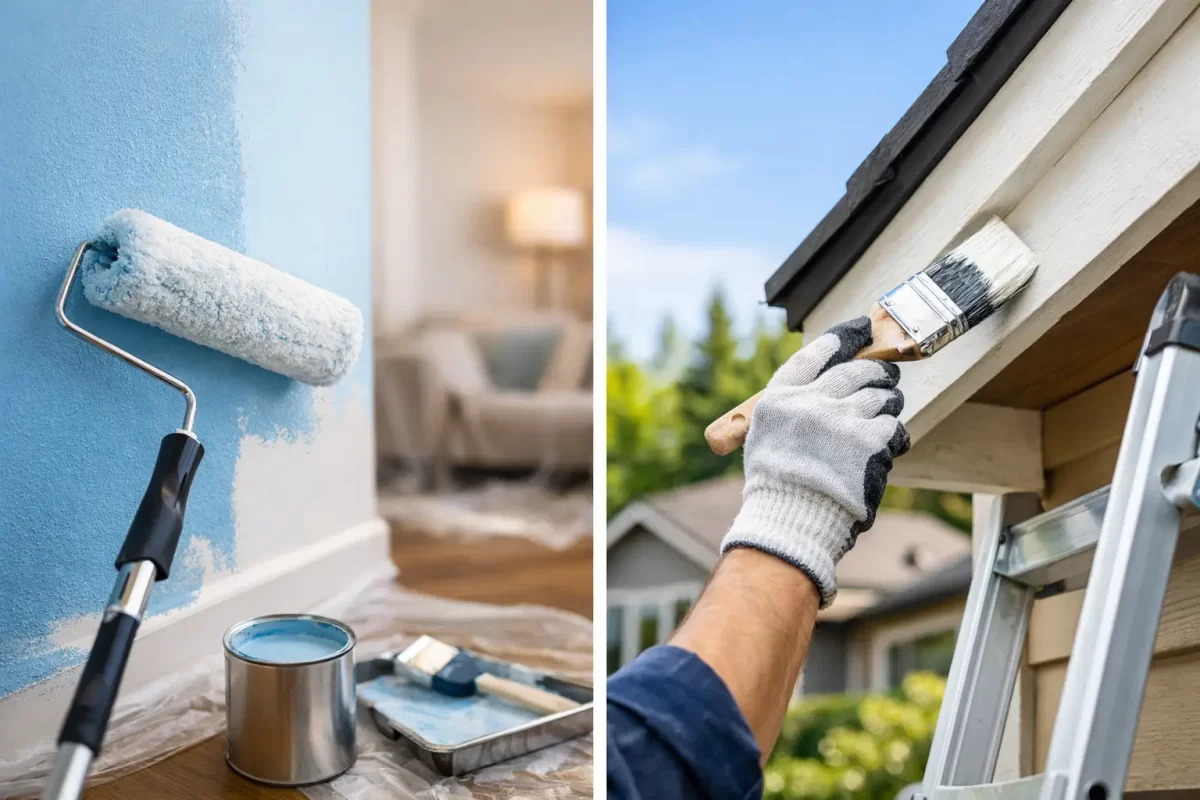
A tin of paint can look much the same on the shelf, but choosing interior versus exterior paint is not simply a matter of picking the right colour. The coating on a bedroom wall has a very different job from the coating on a weatherboard, rendered wall or front fence. Using the wrong product can lead to early peeling, cracking, staining or a finish that never quite looks right.
For property owners, the best result comes from matching the paint system to the surface, its exposure and the way the area is used. That starts with understanding what each type of paint is designed to do.
Interior versus exterior paint: the key difference
Interior paint is made for controlled environments. It needs to provide an attractive, even finish, resist marks and allow routine cleaning without damaging the surface. Most internal paints are formulated with lower odour and lower volatile organic compound levels, making them more suitable for enclosed living and working spaces.
Exterior paint has a tougher assignment. It must cope with sun, rain, humidity, temperature changes and airborne contaminants while still adhering to the surface beneath it. On the Gold Coast and in Tweed, strong UV exposure, summer storms and coastal salt can place extra pressure on exterior coatings.
The main difference is flexibility. Exterior paint generally contains resins that allow the coating to expand and contract as timber, masonry and other materials respond to changing weather. Interior paint is usually harder, which helps it stand up to fingerprints, scuffs and regular washing, but that harder film can crack when used outside.
Why exterior paint should stay outside
It is tempting to use leftover exterior paint indoors, especially for a garage, laundry or utility area. While some exterior products may adhere, they are not designed around indoor comfort or the appearance expected in living spaces.
Exterior coatings can contain mildewcides and other additives intended to combat moisture and biological growth. They may also have a stronger odour and take longer to fully cure. Their finish can be less refined on plasterboard, and their flexibility is unnecessary inside a stable room.
There are exceptions. A professionally specified exterior-grade system may be appropriate for some high-moisture or semi-exposed areas, such as particular outdoor rooms or breezeways. The decision should be based on the substrate and conditions, rather than assuming tougher paint is always better paint.
Why interior paint fails outdoors
Interior paint can look excellent immediately after application to an exterior wall. The problem tends to appear after the coating has been exposed to repeated sunshine and rain. Without the same level of UV resistance and flexibility, the finish may fade, chalk, blister or peel away from the surface.
Exterior surfaces also hold moisture differently. Masonry can absorb water, timber can swell, and metal can heat rapidly in direct sun. A proper exterior system accounts for these movements and often includes primers or sealers designed for the material. Applying interior wall paint directly over a weathered exterior surface skips the protection the building needs.
The same principle applies to ceilings under eaves, external doors and timber trims. Although they may be partly sheltered, they are still exposed to outdoor humidity, reflected heat and changing temperatures. They need an exterior-rated coating unless a painter has assessed the area and specified otherwise.
Finish matters as much as paint type
The sheen level changes both the appearance and practical performance of a painted surface. For interiors, low-sheen finishes are a common choice for walls because they soften minor imperfections while remaining easier to clean than flat paint. Flat or matt finishes can work well on ceilings, where low reflectivity helps conceal joins and surface variation.
In kitchens, hallways, children’s rooms and commercial spaces, a washable low sheen or semi-gloss can make sense because these areas receive more contact and cleaning. Doors, skirting boards and architraves often suit semi-gloss or gloss finishes, depending on the look of the property and the existing paint system.
Outside, low sheen is often used on broad rendered or fibre-cement surfaces because it offers a modern appearance without highlighting every small imperfection. Semi-gloss or gloss is more commonly selected for doors, trims, railings and selected timber features. Higher sheen can be easier to wash, but it also reveals uneven preparation, brush marks and surface defects more readily.
This is one reason professional preparation matters. The correct paint cannot hide loose plaster, failed caulking, cracked render or rough timber. It will only make those issues more visible once light catches the new finish.
Preparation changes from room to room and surface to surface
A quality paint job is built on the surface underneath. Interior preparation often involves protecting floors and furniture, filling dents and nail holes, repairing minor plaster damage, sanding, sealing stains and applying an appropriate undercoat where needed. Bathrooms, laundries and kitchens also need attention to mould, grease and moisture-prone areas before painting begins.
Exterior preparation is usually more demanding. It may involve pressure cleaning, washing down salt residue, scraping loose paint, sanding weathered timber, treating mould, filling cracks, re-caulking gaps and spot-priming exposed areas. Render, brick, timber, metal and previously painted surfaces all call for different preparation and primers.
Timing matters outside as well. Paint needs suitable weather conditions to dry and cure properly. Rain, high humidity, excessive heat or a surface that is still damp can compromise adhesion and finish. An experienced painter plans exterior work around the forecast instead of rushing a coat on because the calendar says the job should be finished.
Choosing paint for Gold Coast conditions
The Gold Coast climate can be hard on external finishes. North- and west-facing walls receive intense sunlight, while shaded sides of a property may be more prone to moisture and mould. Homes near the coast can also collect salt deposits that interfere with paint adhesion if they are not thoroughly cleaned before repainting.
For exterior work, look for products specifically rated for Australian UV conditions and suited to the surface being painted. A quality acrylic exterior coating is a reliable option for many rendered, masonry and fibre-cement surfaces, while timber, metal and decking may require more specialised systems. Paint selection should also consider the existing coating. Not every product is compatible with every old surface.
Colour has a practical effect too. Dark colours absorb more heat, which can place extra stress on exterior timber, cladding and some lightweight building materials. They can look striking, but they need the right preparation, product specification and substrate. A colour consultation can help balance the look you want with the practical demands of the property.
When one project needs both paint systems
Renovations often include interior and exterior work at the same time. New plaster repairs, repainted living areas, refreshed eaves, repaired trims and an updated façade may all be part of one project. Treating every surface as if it takes the same product is where costly mistakes begin.
A clear scope should identify each surface, the preparation required, the primer or sealer where needed, the selected finish and the number of coats. This gives you a better basis for comparing quotes than a single line that simply says “paint house”. It also helps prevent surprises once work has started.
At Jag Painting Solutions, the focus is on assessing the surfaces properly before recommending a paint system. That includes helping clients choose colours and finishes that suit how the property is used, not just how it looks on a small sample card.
A better way to make the decision
Start by asking where the surface sits and what it has to withstand. Is it a plasterboard wall in a low-traffic room, a busy stairwell, a rendered wall facing afternoon sun, or timber exposed to rain? Then consider its current condition. Peeling paint, mould, stains and cracks are preparation issues first, and paint-selection issues second.
If you are planning a repaint, avoid buying paint before the surface has been checked. A little guidance at that stage can save the cost and disruption of repainting far sooner than expected. The right coating, applied over careful preparation, protects the property and gives every room or exterior surface the finish it deserves.


