

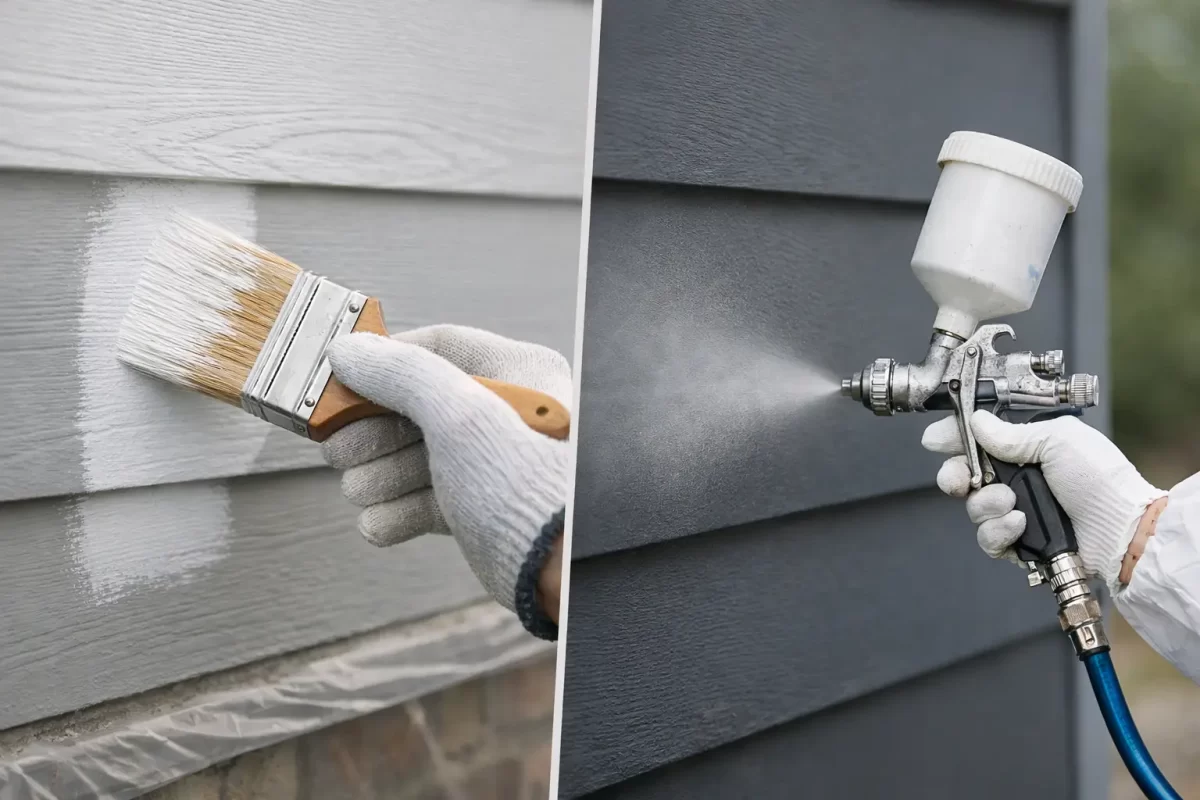
A freshly painted wall can look simple from across the room, but the application method has a major effect on the final result. In the choice between brush painting vs spray painting, there is no single best option for every home, renovation or commercial property. The right method depends on the surface, the coating, the level of preparation required and the finish you expect.
Professional painters often use more than one method on the same project. Spraying may be ideal for broad, open surfaces, while brushes and rollers are needed for detailed areas, cutting in and working around occupied spaces. The aim is not to use the fastest tool. It is to achieve an even, durable finish while protecting your property throughout the job.
Brush Painting vs Spray Painting: The Main Difference
Brush painting applies coating directly to the surface with a brush. It gives the painter close control over where paint goes, how much is applied and how the coating is worked into edges, joins and detailed profiles. In most interior projects, brushing is used alongside rolling, with rollers covering larger wall and ceiling areas efficiently.
Spray painting uses specialist equipment to atomise the coating into a fine mist. When carried out correctly, it can produce a smooth, consistent finish over large or detailed surfaces. It is commonly used for exterior areas, new builds, vacant properties, doors, trims, ceilings, fencing and commercial work where conditions allow.
Neither method removes the need for proper preparation. Cleaning, sanding, patching, plaster repairs, priming and masking are what allow the finished coating to perform well. A poor surface sprayed quickly is still a poor surface.
When Brush and Roller Painting Is the Better Choice
Brush and roller work is often the practical choice for occupied homes. It allows painters to work carefully around furniture, floors, cabinetry, fixtures and personal belongings without the extensive containment required for spraying. It is particularly useful for room-by-room interior repainting where the household needs to keep using parts of the home.
This method also provides excellent control on surfaces with lots of edges or interruptions. Think skirting boards, window frames, door jambs, cornices, detailed timberwork and small repair areas. A quality brush helps a tradesman cut clean lines where walls meet ceilings, trims or feature colours.
For many standard internal walls, a professionally rolled finish is highly even and durable. The slight texture left by a roller is normal and can help disguise minor imperfections in older walls. It is not a lesser finish when the correct roller nap, paint system and technique are used.
Brush and roller painting can also be more efficient for smaller jobs. The set-up is simpler, less masking is required and there is less risk of fine overspray travelling into spaces that are not being painted. This matters in homes where care, cleanliness and minimal disruption are priorities.
Where Spray Painting Makes Sense
Spraying comes into its own on large, open or highly detailed surfaces. A well-prepared exterior fence, broad ceiling, warehouse wall or bank of doors can be coated much faster than with a brush alone. On new plasterboard or newly built interiors, spraying can provide an exceptionally uniform appearance when the site is empty and properly protected.
Spray application is also valuable on intricate profiles. Louvered doors, ornate mouldings, metal balustrades and textured surfaces can be difficult and time-consuming to coat by hand. A spray gun can reach angles and recesses more consistently, reducing brush marks and missed sections.
The finish can be particularly smooth on doors, cabinetry and trims when the coating and equipment are suited to the substrate. That said, the surface must be sanded and prepared to the same standard. Spraying will not hide dents, poor plastering, flaking paint or uneven repairs. In fact, a smooth sprayed coating can make surface defects more noticeable under natural light.
Exterior spraying can be highly effective on the Gold Coast, but weather conditions must be considered. Wind can carry overspray, while excessive heat, humidity or incoming rain can affect application and drying. Experienced painters plan exterior work around the forecast, site access and nearby vehicles, windows, gardens and neighbouring properties.
The Trade-Off: Preparation, Protection and Cost
Spraying may apply paint quickly, but it is not automatically the faster or cheaper choice from start to finish. Before spraying begins, nearby surfaces must be carefully masked and covered. Windows, floors, roofs, gardens, fittings and any areas not receiving paint need protection from overspray.
For a small room filled with furniture, that preparation can take longer than the actual spraying. In those situations, brush and roller application may offer better value and less disruption. Conversely, on an empty home or large commercial space with clear access, the efficiency gained from spraying can outweigh the additional set-up.
Cost is also influenced by the condition of the existing surface. Peeling paint, water damage, cracks and uneven plaster need to be addressed before any topcoat is applied. If a painter gives a price based only on how paint will be applied, rather than the condition of the substrate, important work may be overlooked.
A detailed quote should make clear what preparation, repairs, priming, protection and coating system are included. This gives you a more realistic comparison than simply asking whether spraying costs less than brushing.
Finish Quality Depends on More Than the Tool
It is easy to assume spray painting always looks better because it can create a smooth finish. In reality, quality comes from the whole process: surface preparation, product selection, correct application rates, drying times and the painter’s attention to detail.
A brush can leave visible marks if used poorly, but a skilled painter can achieve a clean finish with minimal brush texture on trims and detailed work. A spray gun can create an even coating, but poor technique can cause runs, dry spray, uneven coverage or paint where it should not be.
The type of coating matters too. Some paints are designed for brushing and rolling, while others perform best when sprayed or require particular thinning and equipment settings. Different substrates such as timber, masonry, metal and plasterboard need compatible primers and topcoats to support adhesion and long-term durability.
Why a Combined Approach Often Delivers the Best Result
Many professional projects use spraying, brushing and rolling together. A painter may spray ceilings or broad exterior sections, then back-roll the coating to work it into porous surfaces and ensure consistent coverage. Doors may be sprayed for smoothness, while frames and surrounding walls are carefully brushed or rolled.
Cutting in by brush remains essential on many jobs, particularly where precision is needed. Even on a sprayed project, detailed finishing work often separates a tidy result from one that looks rushed.
For occupied homes, the combined approach can be tailored to the room and your schedule. High-traffic areas might be completed in stages, while empty rooms or exterior spaces can be prepared for more efficient spray application. The method should suit the property, not force the property to suit the method.
Choosing the Right Method for Your Project
If you are repainting a lived-in home with established furniture and a mix of walls, trims and repairs, brush and roller painting will often be the sensible starting point. If you are finishing a vacant renovation, refreshing a large exterior area or coating detailed joinery, spraying may offer real advantages.
Before work begins, ask how the painter plans to protect surrounding areas, manage dust and overspray, prepare damaged surfaces and check the final finish. These questions reveal far more about workmanship than the equipment alone.
At Jag Painting Solutions, the focus is on recommending the application method that will give your property a clean, lasting result, not simply the method that looks quickest on the day. A clear site assessment and free quote can help you make the decision with confidence before the first surface is prepared.


