

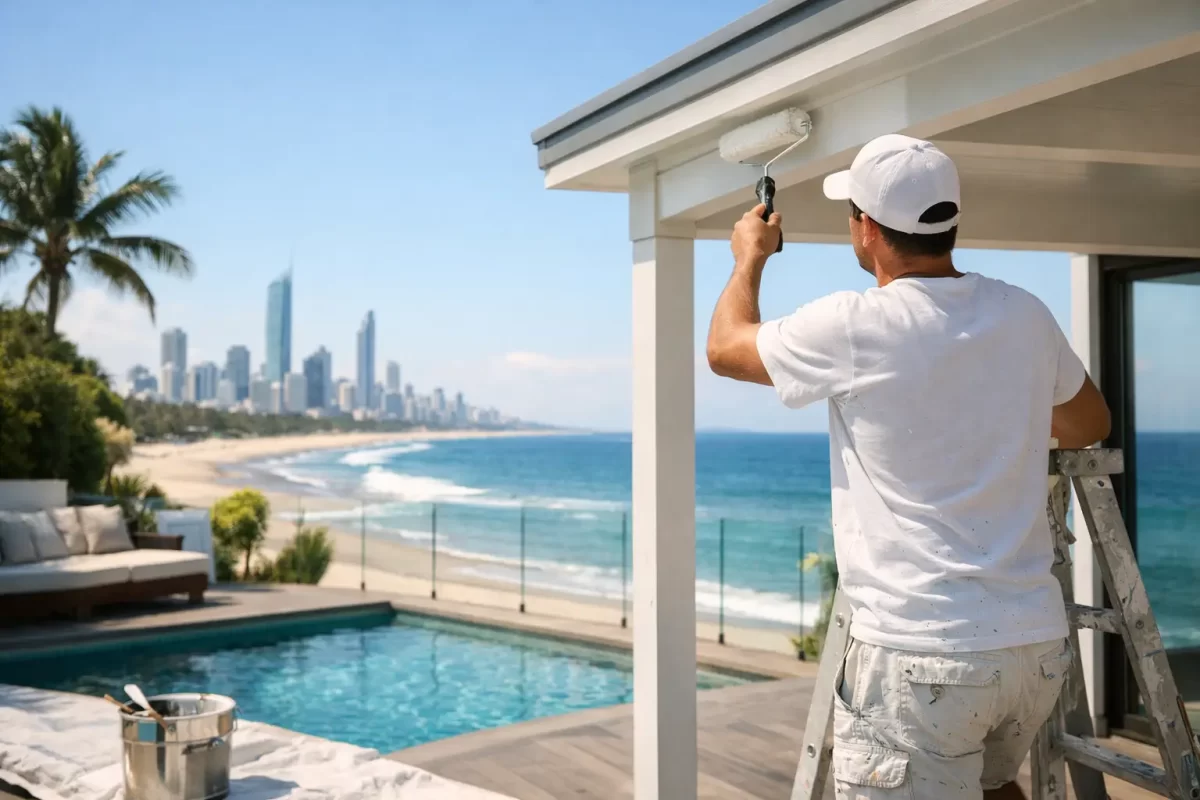
A Gold Coast exterior can look freshly painted one season and tired the next if the coating system has not been chosen for coastal conditions. Coastal painting is not simply about selecting an appealing colour. It is about preparing surfaces properly, using suitable products and applying them carefully enough to stand up to salt air, strong UV exposure, humidity and regular rain.
For homeowners, renovators and commercial property managers, that extra attention makes a practical difference. A quality finish protects the building, improves presentation and can reduce the frequency of major maintenance work. The right approach depends on the age of the property, its position, the surface material and how exposed it is to the elements.
Why coastal properties need a different approach
Living near the water brings obvious benefits, but paintwork is exposed to harsher conditions than it would be further inland. Salt particles settle on walls, window trims, fences, gutters and metalwork. Moisture can work its way into small cracks, while intense sunlight gradually breaks down poorly suited coatings.
On a sheltered property, these effects may appear slowly. On an elevated home, a beachfront building or a property exposed to prevailing winds, they can show up much sooner as chalking, fading, peeling, rust stains or blistered paint. North- and west-facing elevations often receive the greatest sun exposure, so they may need closer inspection even when the rest of the building still looks sound.
The issue is not always the paint itself. Paint commonly fails because the surface beneath it was dirty, damp, loose or poorly repaired before the new coating went on. Applying a premium product over an unprepared surface will not deliver a premium result.
Coastal painting starts with surface preparation
Preparation is where a long-lasting paint job is won or lost. Before painting begins, surfaces should be assessed for flaking coatings, cracks, water damage, mould, salt residue, corrosion and failed sealant. Each issue needs the right remedy rather than a quick cover-up.
Exterior walls often need a thorough wash to remove dirt, salt and chalky residue. Any loose or unstable paint should be scraped and sanded back to a sound edge. Cracks and gaps around trims, windows and joins need appropriate filling or flexible sealant so water cannot get behind the coating.
Timber needs particular care. Exposed boards, eaves, decks and trims can expand and contract with changes in heat and moisture. Bare or weathered timber may require sanding, spot priming and repairs before topcoats are applied. If rot is present, painting over it only delays a more expensive problem.
Metal surfaces present a different challenge. Rust must be removed and treated properly, then coated with a suitable primer before finishing coats are applied. This is especially relevant for gates, railings, balustrades, garage doors and steel elements near the coast. A few rust spots can spread quickly if they are ignored.
Plaster repairs also deserve careful attention. Fine cracks in rendered walls or internal plaster may point to normal movement, but larger or recurring cracks should be assessed before painting. A smooth, consistent finish depends on getting these repairs right first.
Clean, dry and sound matters more than speed
A good painting schedule allows for weather and drying time. Painting onto a damp surface can lead to adhesion problems, blistering and early failure. Similarly, applying exterior paint in extreme heat or direct sun can cause it to dry too quickly, making it harder to achieve an even finish.
There is always a balance between completing a project efficiently and allowing each stage to cure properly. An experienced painter plans around the forecast, the aspect of the building and the requirements of the coating system rather than rushing work simply to finish sooner.
Choosing colours and coatings for the coast
Colour has a major effect on the appearance of a home, but it also has practical consequences. Dark colours absorb more heat, which can place extra stress on certain exterior materials. Lighter colours generally reflect more heat and can help a façade feel cooler, though they may show dirt or salt residue more readily in high-traffic or exposed areas.
There is no single best colour palette for every coastal property. Soft whites, warm neutrals, muted greens, pale blues and modern greys can all work well when they suit the architecture, surrounding landscape and neighbouring homes. The most successful choices usually consider fixed elements such as roofing, stonework, paving, window frames and fencing, not just a paint swatch viewed indoors.
For exteriors, the coating system needs to be suited to the substrate and environment. Masonry, timber, rendered walls and metal all require compatible preparation and primers. Quality exterior paints are formulated to handle UV exposure and weathering, but their performance relies on correct application and sufficient coverage.
Interior colour selection is also worth considering carefully. Coastal homes often have strong natural light that changes throughout the day. A white that looks crisp in a showroom may appear cool or harsh in a bright room, while a deeper neutral may feel heavier than expected in a smaller space. Testing sample colours on several walls and viewing them morning, afternoon and evening can prevent disappointment.
Common signs your exterior is due for attention
Paintwork does not need to be completely peeling before it needs maintenance. Early action can protect the surface and make the preparation process more straightforward. Keep an eye out for these signs:
- Powdery residue that comes off on your hand when you touch painted walls
- Fading or patchy colour, particularly on sun-facing areas
- Fine cracks, peeling edges or bubbling paint
- Rust marks around screws, gutters, railings or metal fixtures
- Mould growth, water staining or deteriorating sealant around windows and doors
These signs do not always mean a full repaint is required. Sometimes a targeted repair and repaint of affected areas is appropriate. However, if the coating is failing across several elevations or the existing paint has reached the end of its life, a complete exterior repaint can provide better protection and a more consistent result.
Do not overlook the smaller exterior elements
A freshly painted façade can still look unfinished if eaves, fascias, gutters, fences, gates and retaining walls are neglected. These elements often take the hardest wear because they are exposed, frequently touched or close to garden moisture.
Fences can benefit from a finish that suits both the property and the maintenance level you are prepared to commit to. Dark colours may create a modern backdrop for planting, while lighter tones can make smaller yards feel more open. The trade-off is that very dark fence colours can show marks and sun fading more easily over time.
For commercial properties, presentation is just as practical as it is visual. Well-maintained paintwork gives customers, tenants and staff confidence that the premises are cared for. Retail fronts, offices, body corporate common areas and rental properties all benefit from a planned approach that considers access, operating hours, surface condition and minimal disruption.
How to get a finish that lasts
The best coastal painting results come from clear planning and careful workmanship. Start with an honest assessment of the building, including areas that are difficult to see from ground level. Decide whether the project is primarily maintenance, a renovation update or preparation for sale, as this can influence the scope and colour choices.
It is also sensible to discuss the condition of existing coatings before committing to a colour. A professional painter can identify whether surfaces need washing, repairs, priming, plastering or more extensive preparation. This avoids the frustration of receiving a finish that looks good initially but does not hold up as expected.
At Jag Painting Solutions, the focus is on treating each property with care, from preparation and colour guidance through to the final finish. For Gold Coast and Tweed properties facing salt, sun and wet weather, experienced tradesmanship is not an extra. It is what helps the paintwork continue doing its job.
A well-planned repaint can refresh the way a property feels while giving its exterior the protection it needs. If you are noticing early signs of wear or planning a larger renovation, arranging a professional inspection and quote is a sensible first step before small issues become larger repairs.


