

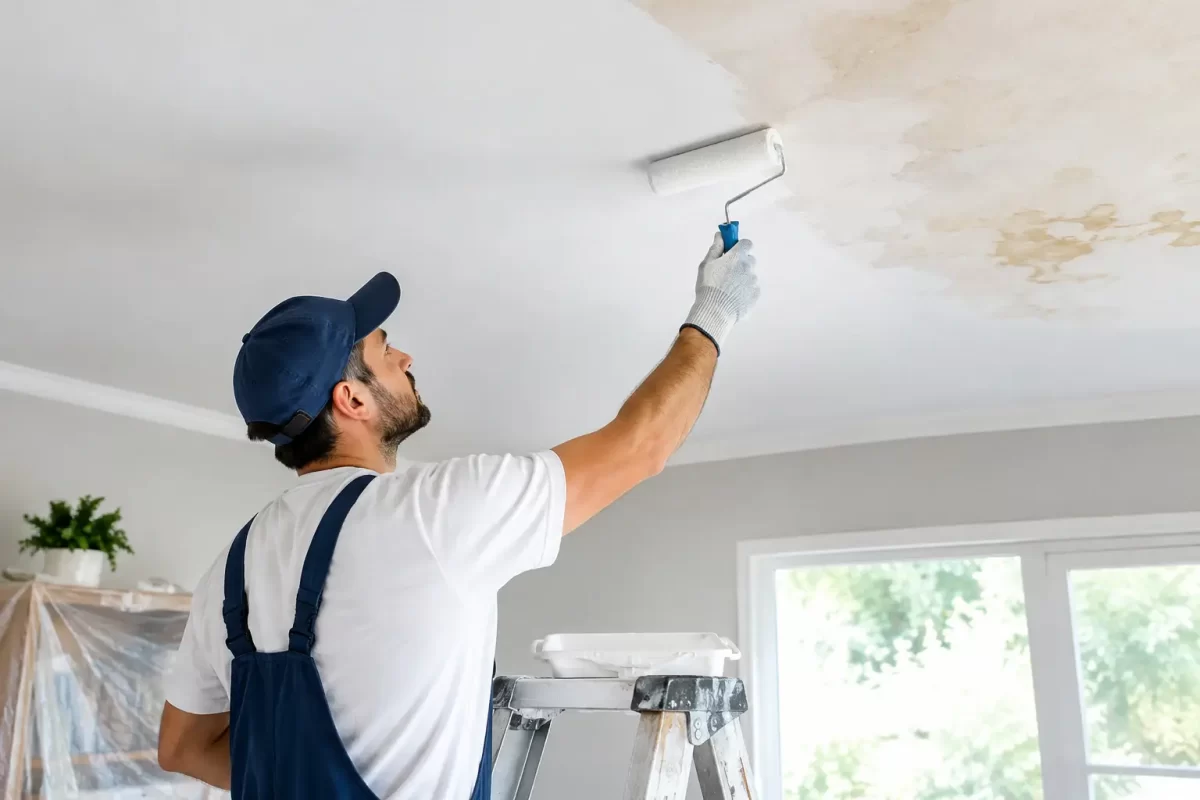
A brown ring above the dining table or a yellow patch near the bathroom is more than a painting problem. Effective ceiling stain repainting solutions begin by identifying why the stain appeared, then preparing the surface properly before any new paint goes on. Painting over a stain without addressing its cause may look better briefly, but it often leads to yellowing, peeling or the same mark returning through the fresh coat.
For Gold Coast property owners, moisture is a common concern. Heavy rain, humid conditions, ageing roof penetrations and bathroom ventilation issues can all leave a visible mark on a ceiling. A quality finish depends on careful inspection, the right repair work and materials that are suited to the stain.
Find the cause before repainting a stained ceiling
The first question is simple: is the stain old and dry, or is it still active? A ceiling can remain discoloured long after a roof leak has been repaired, but repainting too soon after an active leak only hides a problem that is continuing behind the surface.
Water stains commonly come from a damaged roof tile, flashing, gutter overflow, leaking pipework, air-conditioning drainage or a bathroom above. In two-storey homes, plumbing leaks can travel before showing themselves downstairs, so the visible stain is not always directly beneath the source. In commercial spaces, roof leaks around air-conditioning units and penetrations are also common.
Moisture from condensation is another possibility, particularly in bathrooms, laundries and poorly ventilated rooms. If the mark is accompanied by mould spotting, peeling paint or a musty smell, the room may need better ventilation as well as surface treatment. An exhaust fan that is undersized, rarely used or not vented effectively can allow moisture to settle on the ceiling day after day.
Before painting, make sure the source has been repaired and the area is fully dry. Depending on the extent of the issue, this may mean arranging a roofer, plumber, waterproofing specialist or mould remediation service first. Painting contractors can assess the condition of the ceiling and advise on preparation, but stopping an active water issue is the essential first step.
When staining has damaged the ceiling itself
Not every stained ceiling can be treated with primer and paint alone. Water can soften plasterboard, damage ceiling cornices and weaken joint compounds. Press gently around the affected area only if it is safe to do so. A ceiling that feels soft, swollen or uneven may need damaged plasterboard removed and replaced.
Fine cracking around a stain can be caused by movement as the material dries, while bubbling paint often indicates moisture was trapped beneath the coating. These areas should be scraped back to a sound edge rather than simply painted over. Any loose material needs to be removed, repaired, sanded and sealed to create an even surface.
Mould also requires more than a cosmetic response. It should be treated safely and thoroughly before repainting. If the affected area is widespread, recurring or associated with significant water damage, professional assessment is the sensible option. The goal is not to cover the evidence, but to restore a clean, dry and stable surface.
Ceiling stain repainting solutions that provide a lasting finish
Once the ceiling is dry and sound, preparation makes the difference between a temporary cover-up and a finish that holds up. A professional approach usually follows a clear sequence: clean the surface, remove loose paint, repair defects, sand the repaired area, apply a suitable stain-blocking primer, then repaint the full ceiling for an even result.
Clean and prepare the affected area
Dust, residue and mould contamination can interfere with adhesion. The ceiling needs to be cleaned with an appropriate product, then allowed to dry fully. Flaking or blistered paint is scraped back, and rough edges are feathered with sanding so the repair does not show through the new coating.
Small cracks, screw pops and shallow dents can be filled at this stage. Where water has stained joint lines or plaster repairs, careful patching is needed to prevent an uneven sheen once the ceiling is painted. Ceilings catch natural and artificial light differently from walls, so even minor surface flaws can become noticeable.
Use a genuine stain-blocking primer
Standard ceiling paint is not designed to lock in water marks, tannin stains, smoke residue or yellow nicotine discolouration. A dedicated stain-blocking primer is used to seal the affected area before the finishing coats are applied.
The right primer depends on the type and severity of the stain. Some water marks need a stronger solvent-based or shellac-based sealer, while other surfaces may suit a high-quality water-based stain blocker. The trade-off is that stronger products can have more odour and require careful ventilation, but they can be far more reliable on stubborn stains. Applying ordinary paint straight over a dark water mark is one of the most common reasons stains reappear.
Primer should extend beyond the visible outline of the stain. After it has dried, the surface can be checked for any remaining bleed-through before topcoats are applied. A second sealing coat may be needed for severe discolouration.
Repaint the whole ceiling, not just the patch
Spot-painting a ceiling often creates a visible difference in colour, texture or sheen, even when the paint colour appears to match. Older paint fades over time, and repairs can reflect light differently. For the cleanest result, repainting the complete ceiling is usually the better choice.
A quality flat ceiling paint helps minimise glare and creates a consistent appearance across the room. In bathrooms, kitchens and laundries, the coating also needs to suit the higher moisture level of the space. Good application technique matters as much as the product choice. Maintaining a wet edge and applying an even coat helps avoid lap marks and patchiness.
Common mistakes that allow stains to return
The fastest-looking fix is often the least durable. Painting before a roof or plumbing issue is fixed will only delay further damage. Similarly, coating over a damp ceiling can trap moisture and lead to bubbling, mould growth or adhesion failure.
Another mistake is skipping primer because the stain looks light after cleaning. Water stains can contain contaminants that migrate through standard acrylic paint as it dries. A stain-blocking primer costs less than repainting the room again when the mark returns.
It is also tempting to paint only the visible patch. This can work in a utility area where appearance is not a priority, but in living rooms, bedrooms and hallways it commonly leaves an obvious repair. A full-ceiling repaint gives a more uniform finish and protects the presentation of the room.
When to call a professional painter
A small, old stain on a fully dry and sound ceiling may be manageable for a confident homeowner. However, professional help is worthwhile when the cause is unclear, the stain is large, plasterboard is damaged, mould is present, or the ceiling has a textured or decorative finish.
Experienced painters can identify preparation issues, repair plaster defects and select primers that suit the stain rather than relying on a one-size-fits-all product. They can also protect flooring, furniture and surrounding surfaces while completing the work neatly. This is especially valuable in occupied homes, renovation projects and commercial premises where disruption needs to be kept to a minimum.
Jag Painting Solutions provides ceiling repairs and repainting as part of a considered interior finishing service. The focus is on achieving a clean result that looks right in the room, while being clear about any underlying issue that should be resolved before painting begins.
A ceiling stain does not have to become a recurring eyesore. Once the moisture source is resolved and the surface is correctly sealed, repaired and repainted, the room can look fresh again and stay that way.


