

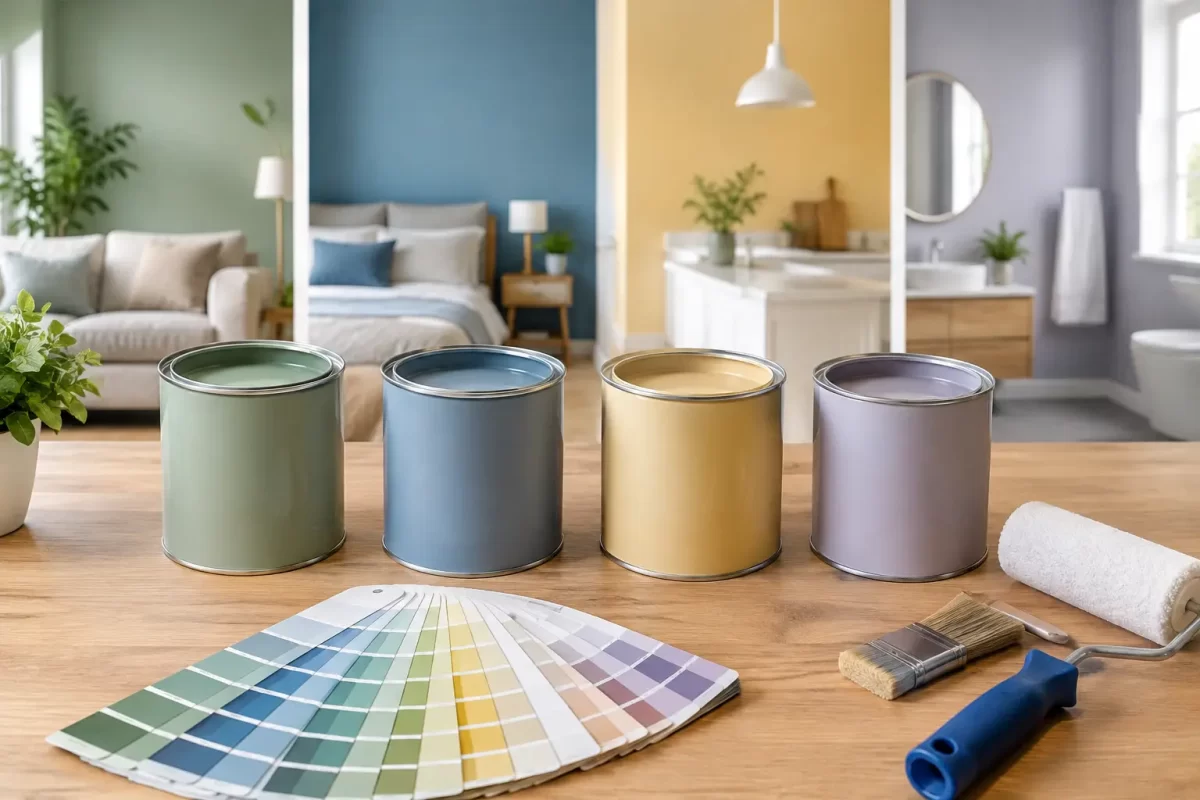
A freshly painted room can still disappoint if the finish is wrong. Scuff marks can show up too easily on a hallway wall, a bathroom ceiling can struggle with moisture, or a glossy lounge-room wall can highlight every small plaster imperfection. When interior paint types are compared properly, the best choice comes down to the room, the surface condition, the amount of traffic and the finish you want to live with.
For Gold Coast homes in particular, humidity, busy family living and bright natural light can all affect how a painted surface performs and looks. A professional result is not simply about choosing a colour. It starts with selecting a suitable paint system, preparing the surface carefully and applying each coat consistently.
Interior paint types compared: paint base and finish
Most interior paint decisions involve two separate choices. The first is the paint base, such as water-based acrylic or enamel. The second is the sheen level, from flat through to gloss. Both matter.
Water-based acrylic paints are the common choice for interior walls and ceilings. They have low odour, dry relatively quickly and are easy to clean up with water. Quality acrylics are available in highly washable formulations, making them a practical option for living areas, bedrooms, hallways and children’s rooms.
Enamel paints are traditionally oil-based and known for their hard-wearing finish on timberwork, doors and trims. Water-based enamel has become a popular alternative because it offers a durable finish with less odour and faster drying times. The right product depends on the surface, the existing coating and the level of wear it receives. Older oil-based trim, for example, may need specific preparation and a suitable primer before repainting.
The sheen level affects both appearance and maintenance. Higher sheen paints generally resist marking and wipe down more easily, but they also reflect more light and can make dents, joins and uneven plasterwork more noticeable. Lower sheen finishes soften the appearance of a wall, although they can be less forgiving when it comes to washing or touching up.
Choosing wall paint for living spaces and bedrooms
For most internal walls, low sheen is the reliable all-round choice. It provides a soft, modern appearance with a slight level of washability, without the reflective look of satin or gloss. It suits open-plan areas, bedrooms, dining rooms and lounges, particularly where homeowners want a refined finish that does not draw attention to minor surface variations.
Matte or flat paint has very little shine. It can look excellent on well-prepared walls and is often chosen for formal rooms or low-traffic spaces. The trade-off is that it may be less practical in homes with young children, pets or frequent entertaining. Not all matte paints perform the same way, however. Premium washable matte products can offer greater stain resistance than traditional flat finishes, so it is worth discussing how the room is used rather than selecting paint on appearance alone.
Satin and semi-gloss finishes are more reflective and more durable. They can work well in a busy passage, playroom, mudroom or commercial setting where regular cleaning is expected. On broad wall areas, though, they require particularly careful plastering, sanding and application. Light from windows and downlights can quickly reveal roller marks or surface flaws in a higher-sheen finish.
A good rule is to choose the lowest sheen that will reasonably handle the room’s day-to-day use. This gives you a practical surface while keeping the walls looking calm and even.
Ceiling paint is designed for a different job
Ceilings are often treated as an afterthought, but they need a paint that minimises glare and provides even coverage across a wide area. Ceiling paint is usually very flat, helping to conceal small imperfections and reduce visible lap marks. It is commonly white, but a soft off-white can be a better match in homes with warmer wall colours or timber finishes.
Bathrooms, laundries and kitchens need more consideration. Standard ceiling paint may not be the right choice where steam and condensation are common. A mould-resistant or moisture-resistant coating can provide better protection, provided the room also has suitable ventilation. Paint cannot solve an ongoing moisture problem, so leaks, inadequate extraction fans and damaged plasterboard should be addressed before painting begins.
If staining from a past leak is visible, sealing it with the correct stain-blocking primer is essential. Painting straight over water marks can allow them to bleed back through the new finish.
The best paint types for kitchens, bathrooms and laundries
Wet areas need finishes that cope with cleaning, splashes and humidity. For walls, a quality washable low-sheen or semi-gloss acrylic is often appropriate. The best choice depends on ventilation and the proximity of water. A kitchen splashback area, for example, may need a more durable coating than the wall above a dining table.
Semi-gloss is commonly used on bathroom and laundry walls because it is easier to wipe down and offers better moisture resistance. Its shine can be more pronounced, so surface preparation becomes even more important. Where a softer look is preferred, some modern low-sheen paints are formulated for wet areas and can be a good middle ground.
Paint is not suitable for every surface. Areas exposed to direct and regular water, such as inside a shower recess, require waterproofing and tiling or another approved wet-area system. A sound painting specification respects these limits instead of treating paint as a shortcut.
Doors, skirting boards and window trims
Doors, architraves and skirting boards receive more knocks, fingerprints and cleaning than most walls. They need a tougher coating, usually enamel in satin, semi-gloss or gloss. Satin offers a subtle sheen and is a popular choice for a contemporary interior. Semi-gloss has more shine and greater visual definition, while full gloss provides the most reflective, traditional look.
Water-based enamel is often preferred inside occupied homes because it dries faster and has a lower odour than oil-based products. It is well suited to many modern interiors. Oil-based enamel can still have a place where a particular finish or compatibility requirement calls for it, but it takes longer to dry and may yellow over time in rooms with limited natural light.
Preparation makes the difference on trim work. Old peeling coatings need to be removed or stabilised, glossy surfaces need sanding, gaps need flexible filler or sealant where appropriate, and bare patches need priming. Without this groundwork, even premium paint can chip or fail early.
Primer is not just an extra coat
Primer helps paint adhere, seals porous surfaces and creates a consistent base for the topcoat. It is particularly valuable on new plasterboard, repaired plaster, bare timber, stained areas and surfaces with a major colour change.
New plasterboard and freshly repaired walls can absorb paint unevenly if they are not sealed properly. That may leave flashing, patchiness or an inconsistent sheen once the finish coat dries. A suitable sealer creates an even surface and helps the final colour look as intended.
Specialty primers are also needed for difficult surfaces. Water stains, nicotine marks, tannin bleed from timber and previously painted glossy finishes each require a different approach. This is why an on-site assessment is more useful than assuming one product will suit every room.
Colour and light can change the finish you see
The same paint colour can look noticeably different between a sunlit Gold Coast living room and a shaded bedroom. Natural light, LED temperature, flooring, curtains and surrounding colours all influence the result. Sheen changes it again. A darker colour in semi-gloss can look much stronger and more reflective than the same colour in low sheen.
Before committing, test sample colours on a large piece of painted board or an unobtrusive section of wall. View them morning, afternoon and evening. Testing separate boards also lets you move the colour around the room without marking every wall.
For renovations, consider how the wall colour will sit alongside existing tiles, benchtops, cabinetry and timber. The most effective colour scheme is one that works with the fixed elements you are keeping, rather than competing with them.
When professional advice saves rework
Comparing interior paint types is useful, but the final decision should account for what is already on the walls, the condition of the plaster and the demands of the property. A rental refresh, a family-home renovation and a commercial fit-out can all need very different specifications.
Experienced painters look beyond the paint tin. They identify cracking, water damage, poor previous repairs, adhesion issues and areas that need plastering before any colour is applied. They can also recommend a finish that matches your preferred look without sacrificing durability where it matters.
If you are planning an interior repaint on the Gold Coast or in Tweed, a detailed quote and colour discussion can remove a great deal of guesswork. Jag Painting Solutions can help match the right preparation, paint type and finish to the way your property is actually used, so the completed space looks cared for from every angle.


