

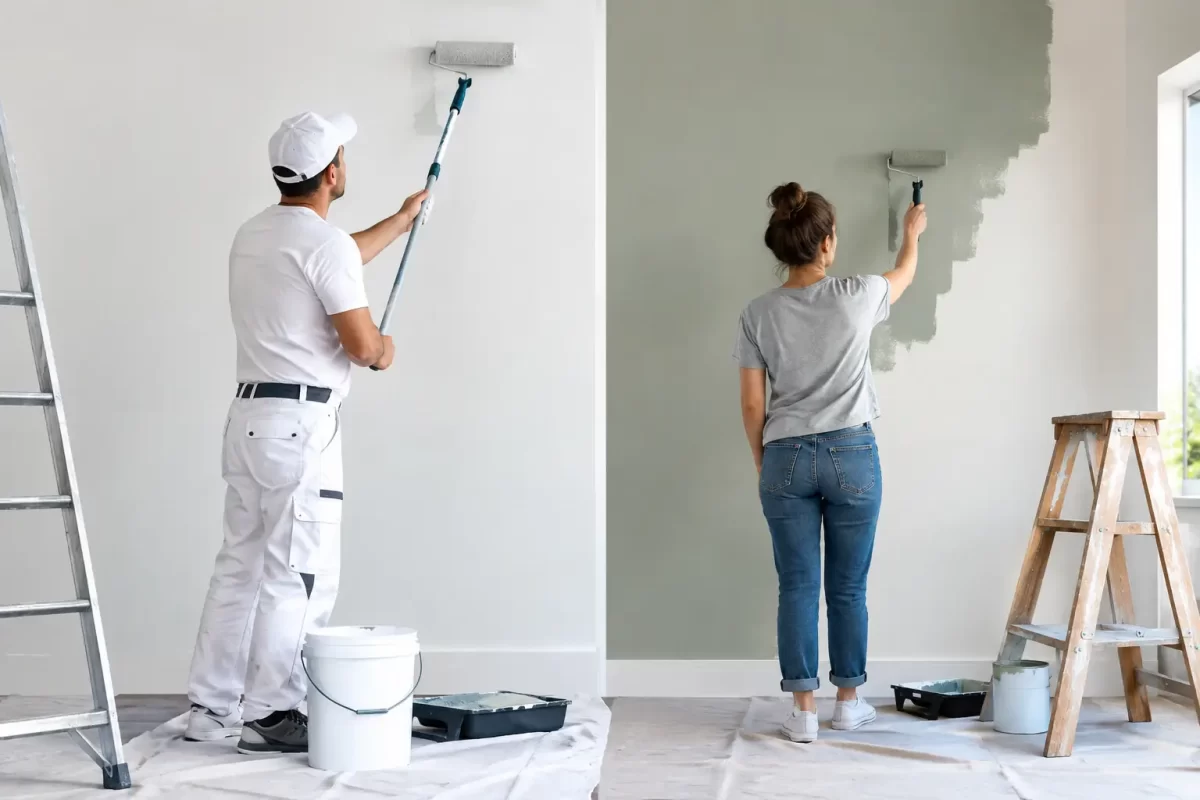
A freshly painted room can make a home feel cared for. A poorly prepared wall, visible roller marks or peeling exterior paint can do the opposite – and fixing it often costs more than getting the job done properly the first time. When weighing up professional painters versus DIY, the right choice comes down to more than the price of a few tins of paint.
DIY painting can suit a small, low-risk job where you have time, patience and realistic expectations. For larger rooms, detailed interiors, exterior surfaces or commercial premises, professional preparation and application usually make the difference between a short-term refresh and a finish that holds up.
Professional Painters Versus DIY: What Are You Really Paying For?
The upfront cost of DIY is appealing. You buy paint, rollers, brushes, drop sheets, tape, filler, sandpaper and perhaps a ladder or spray equipment. If the room is straightforward and the existing surface is in good condition, it can be a sensible way to update a spare bedroom or garden shed.
However, paint is only one part of the job. A quality result relies on surface preparation, selecting the right coating system, applying it evenly and allowing adequate drying time between coats. These are the areas where a job can quickly become more time-consuming and expensive than expected.
Professional painters price for the full scope of work. That includes protecting floors and furniture, repairing minor surface damage, preparing walls, cutting in cleanly, applying suitable coats and leaving the area tidy. You are also paying for experience: knowing when a wall needs sealing, when flaking paint must be removed, and when a crack is cosmetic versus a sign that plastering work is needed first.
For a renovation or property being prepared for sale, that certainty has real value. A clean, consistent finish helps rooms feel brighter, more modern and better maintained.
The Difference Is Usually in the Preparation
Most painting problems start before the first coat goes on. Walls can look sound from across the room but still have grease marks, hairline cracks, old patch repairs, chalky residue or uneven texture. Exterior surfaces may have mould, salt exposure, loose paint or weathered timber that needs specific treatment.
DIY painters often focus on choosing a colour and getting paint on the wall. Professional tradesmen start by assessing the surface. They fill, sand, patch, clean and prime where required, because paint will not hide every imperfection. In fact, a new coat can make dents, rough patches and uneven repairs more obvious, especially under downlights or afternoon sun.
This matters on the Gold Coast, where exterior paintwork deals with strong UV exposure, humidity and coastal conditions. The correct preparation and product choice can affect how well a finish resists fading, blistering and early peeling. A professional will also plan work around weather conditions rather than applying paint when rain, heat or moisture could compromise the result.
Interior work needs care as well as skill
Painting inside a lived-in home is not simply a matter of moving furniture to the middle of the room. Floors, cabinetry, windows, fittings and belongings need proper protection. Dust from sanding needs to be controlled, and every edge around ceilings, skirting boards, doors and switches needs careful attention.
A homeowner can achieve a good result on a simple wall. But high-visibility areas such as open-plan living spaces, stairwells, feature walls, ceilings and detailed trim demand a steadier hand and more consistent technique. Cutting in, maintaining a wet edge and avoiding lap marks all take practice.
Time, Equipment and Disruption
DIY painting often takes longer than planned. There is furniture to shift, surfaces to clean, repairs to dry, coats to apply and tools to wash at the end of each session. If you are painting on weekends or after work, a single room can stretch across several weeks.
A professional team brings the equipment and workflow needed to complete the work efficiently. That may include extension poles, quality brushes and rollers, dust-control sanding equipment, access equipment and protective coverings. More importantly, they know how to sequence the job so preparation, drying and application happen without unnecessary delays.
This does not mean every project needs a contractor. If you enjoy hands-on work, have a free weekend and are repainting a small room in the same colour, DIY may be worthwhile. The calculation changes when access is difficult, the area is large, the finish needs to be flawless or the space needs to be back in use quickly.
For business owners, downtime is often the deciding factor. A commercial repaint needs to be organised around customers, staff, tenants or trading hours. Professional painters can plan the work to reduce disruption and keep the site clean, safe and presentable.
Where DIY Costs Can Catch You Out
The cost of a DIY job is not only the receipt from the paint shop. It includes materials, equipment, your time and the cost of correcting mistakes. Buying lower-grade paint to save money can mean needing extra coats or repainting sooner. Using the wrong primer can lead to poor adhesion. Skipping preparation can leave a finish that looks uneven within days.
There is also the question of waste. Paint quantities are easy to underestimate, particularly when surfaces are porous or colours are changing dramatically. Overestimate, and you may be left storing unused paint in the garage. Underestimate, and you may struggle to match a batch or delay the work.
Access and safety should be treated seriously. Painting high ceilings, stairwells, second-storey exteriors, roofs or difficult commercial areas is not a job to tackle from an unstable ladder. Professional painters have the practical experience and appropriate equipment to work safely at height while maintaining a consistent finish.
When Hiring a Professional Is the Better Investment
A professional painter is usually the stronger choice when the project involves exterior painting, extensive repairs, plastering, detailed timberwork, high ceilings or multiple rooms. It is also a good option when you need reliable timing, clear communication and a home that is treated with respect throughout the process.
Colour selection is another area where guidance can prevent expensive regret. A sample that looks perfect under shop lighting can appear too cool, too dark or too bright once it is on a large wall. Natural light, existing flooring, furnishings and the direction a room faces all affect how colour reads. A colour consultation can help narrow the choices and create a consistent look across the property.
The best contractors do not simply arrive, paint and leave. They discuss the condition of the surfaces, clarify the scope, explain what preparation is required and provide a clear quote. That allows you to make a decision based on the full job, not a vague promise or a low figure that excludes important work.
At Jag Painting Solutions, this approach means treating each home, renovation or commercial space as a finishing project, not just a paint application. Proper plaster repairs, thoughtful colour guidance and careful protection of the property all support the final result.
How to Make the Right Choice for Your Project
Start with an honest assessment of the area. Is it a small, sound wall that can be painted without major preparation, or is it a prominent space with cracks, stains, peeling coatings or hard-to-reach sections? Consider the standard you want, how much time you can commit and whether you would be comfortable correcting an imperfect result.
If you choose DIY, invest in good preparation and quality materials rather than rushing to the topcoat. Test your chosen colour in the actual room, allow each coat to dry properly and keep your work area protected and organised.
If you choose a professional, ask for a detailed quote that identifies preparation, repairs, paint systems and the areas included. A clear scope gives you confidence that the finish you expect is the finish being allowed for.
Your property deserves more than a quick coat to cover what is underneath. Whether the job is a modest refresh or a full repaint, choosing the right approach at the start gives you the best chance of enjoying the result for years to come.


