

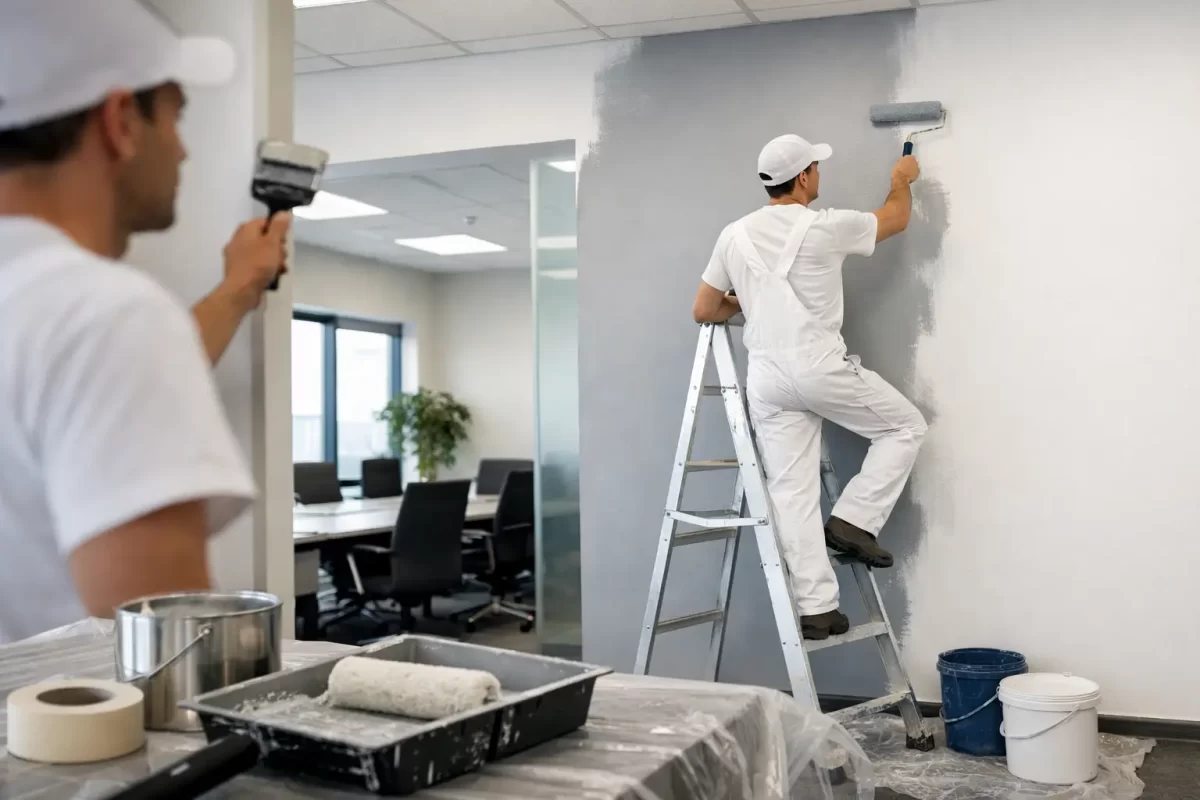
A tired office shows up faster than most managers expect. Scuffed corners, patched plaster, roller marks and faded colour can make a workspace feel neglected, even when the business itself is running well. If you are working out how to repaint commercial office walls, the real challenge is not just getting fresh paint on the surface. It is doing the job with minimal disruption, a clean finish and enough durability to cope with daily wear.
Commercial office painting is different from repainting a spare room at home. Offices have foot traffic, furniture movement, shared spaces, meeting rooms, workstations and often tighter timeframes. That means the finish needs to look sharp, but the planning behind it matters just as much.
How to repaint commercial office walls without disrupting work
The best office repaint starts before a brush or roller comes out. A clear plan saves time, avoids rework and helps keep the workplace functional while painting is underway.
Start by assessing the condition of the walls properly. Many office walls look like they only need a fresh coat, but once you inspect them in natural and artificial light, the issues become clearer. You may find dents from chairs, cracking around cornices, old patch repairs, stains, adhesive residue from signage, or glossy sections where previous touch-ups do not match. If those problems are painted over without treatment, the new finish will not look professional for long.
It also helps to decide early whether the office can be painted in stages. In many commercial settings, this is the most practical option. Reception areas, boardrooms, hallways and individual offices can often be completed zone by zone. That lets staff continue working in other parts of the premises and reduces downtime. For some businesses, after-hours or weekend work is the better fit, particularly where privacy, noise or access is an issue.
Colour choice should be practical as well as visual. Lighter neutrals can make offices feel cleaner and more open, but they may show marks sooner in high-traffic areas. Darker feature walls can add depth, though they tend to show surface imperfections more clearly and may require extra coats for even coverage. In client-facing spaces, the safest option is usually a clean, modern colour scheme that reflects the business brand without dominating the room.
Surface preparation matters more than the final coat
If there is one part of repainting office walls that should never be rushed, it is prep. Good preparation is what separates a finish that looks crisp for years from one that starts failing within months.
The first step is clearing or protecting the area. Furniture should be moved where possible, and anything that stays in the room needs proper covering. Floors, skirting boards, glass partitions, power points and fixtures should all be masked carefully. In a commercial office, neatness during the job is part of professionalism. Paint splatter on carpet tiles or dust across workstations is not acceptable.
Walls then need to be cleaned. This is often overlooked in offices because the surfaces do not always look dirty at first glance. But airborne dust, hand marks, grease near kitchenettes, and residue from cleaning products can all affect adhesion. A clean surface gives the new coating the best chance to bond properly.
After cleaning comes repair work. Nail holes, dents and cracks need filling, while damaged plaster may need more extensive treatment before painting can begin. If there are signs of bubbling, peeling or moisture damage, it is worth pausing to find the cause. Repainting over water-damaged plaster or unstable old paint usually leads to the same problem reappearing.
Sanding is another step that makes a visible difference. It smooths filled areas, removes minor surface irregularities and helps dull glossy existing finishes. In offices with strong overhead lighting, even small imperfections can stand out once the walls are repainted. That is why careful sanding and feathering patch repairs matter.
Primer is not always needed across every wall, but in many office repaint jobs it plays an important role. It is especially useful over repaired sections, stains, colour changes and surfaces with uneven porosity. When walls have had multiple touch-ups over time, a suitable primer can help create a more consistent final appearance.
Choosing the right paint for an office environment
Not all interior paints are suited to commercial use. Office walls need a coating that can handle regular cleaning, occasional knocks and changing light conditions without losing its appearance too quickly.
Washability is a key factor. In corridors, reception areas and shared spaces, walls collect marks from bags, chairs and everyday traffic. A higher quality washable finish makes maintenance easier and extends the life of the repaint. That does not mean the glossiest product is best. In many offices, a low-sheen or matte finish gives the right balance between appearance and practicality. Matte finishes hide imperfections better, while low-sheen coatings can be easier to wipe down.
Low-odour, low-VOC products are also worth considering, especially if the office will stay partly operational during the work. Strong paint smells can be disruptive for staff and unpleasant for clients. Better quality commercial-grade coatings often provide a more comfortable working environment during and after application.
Colour consistency matters more in offices than people think. Large wall areas, open-plan spaces and artificial lighting can all exaggerate minor differences in tone. Using the correct product system, maintaining a wet edge during application and applying enough coats are all part of achieving an even result.
Application techniques that affect the final look
Once the prep is done, the painting itself needs to be methodical. Rushing this stage is where visible lap marks, patchiness and poor coverage often begin.
Cutting in around edges should be tidy and consistent. In commercial interiors, lines around ceilings, trims, glazing and joinery need to look sharp because these details are more noticeable in professional spaces. Roller selection matters too. The wrong nap can leave too much texture or not enough paint on the surface, which affects both appearance and durability.
Most office walls need at least two coats for a proper repaint, even if the colour change is minor. One coat may freshen the wall temporarily, but it rarely gives the depth, uniformity and wear performance expected in a commercial setting. Drying times between coats also need to be respected. Pushing ahead too quickly can compromise the finish.
Lighting should be checked as the job progresses. What looks even under one light source can show streaks or flashing under another. Offices often combine daylight, LED panels and feature lighting, so inspecting the finish from different angles is a worthwhile step rather than an extra one.
When DIY works – and when it usually does not
Some smaller office repaint projects can be handled in-house, particularly if it is a single room with clear access and walls in good condition. If the team has the time, the right equipment and realistic expectations, a basic refresh may be manageable.
But larger or active workplaces are a different story. The moment access needs to be staged, repairs are visible, colours need to match across multiple areas, or disruption must be tightly managed, professional help often becomes the more cost-effective option. A poor paint job in a commercial office can be expensive to fix, especially if staff productivity is affected or client-facing areas look unfinished.
That is where experience counts. A professional team understands how to sequence the work, prepare surfaces properly, protect the site and deliver a finish that stands up to office use. For businesses in the Gold Coast and Tweed region, working with an experienced contractor such as Jag Painting Solutions can also make colour decisions and scheduling much easier.
Common mistakes when repainting commercial office walls
The most common mistake is underestimating the prep. Skipping repairs, failing to clean surfaces or painting over unstable coatings nearly always leads to an uneven result. Another issue is choosing paint based on price alone. In a commercial office, cheaper products often need more maintenance and can wear out faster, which shortens the value of the repaint.
Poor scheduling is another problem. Painting during peak business hours without a plan for noise, access and drying times can create unnecessary frustration for staff and visitors. There is also the temptation to do spot touch-ups instead of repainting complete wall sections. While touch-ups sound efficient, they often remain visible, especially on older painted surfaces where colour and sheen have shifted over time.
Finally, some offices chase trends too hard. Bold colours can work well in the right setting, but they should support the workplace rather than date it quickly. In most professional environments, a restrained palette with well-chosen feature areas delivers a longer-lasting result.
A well-painted office does more than cover marks. It changes how the space feels to staff, clients and anyone walking through the door. If you are planning how to repaint commercial office walls, take the time to get the prep, product choice and timing right – because the smoothest projects are the ones that look effortless when they are finished.


