

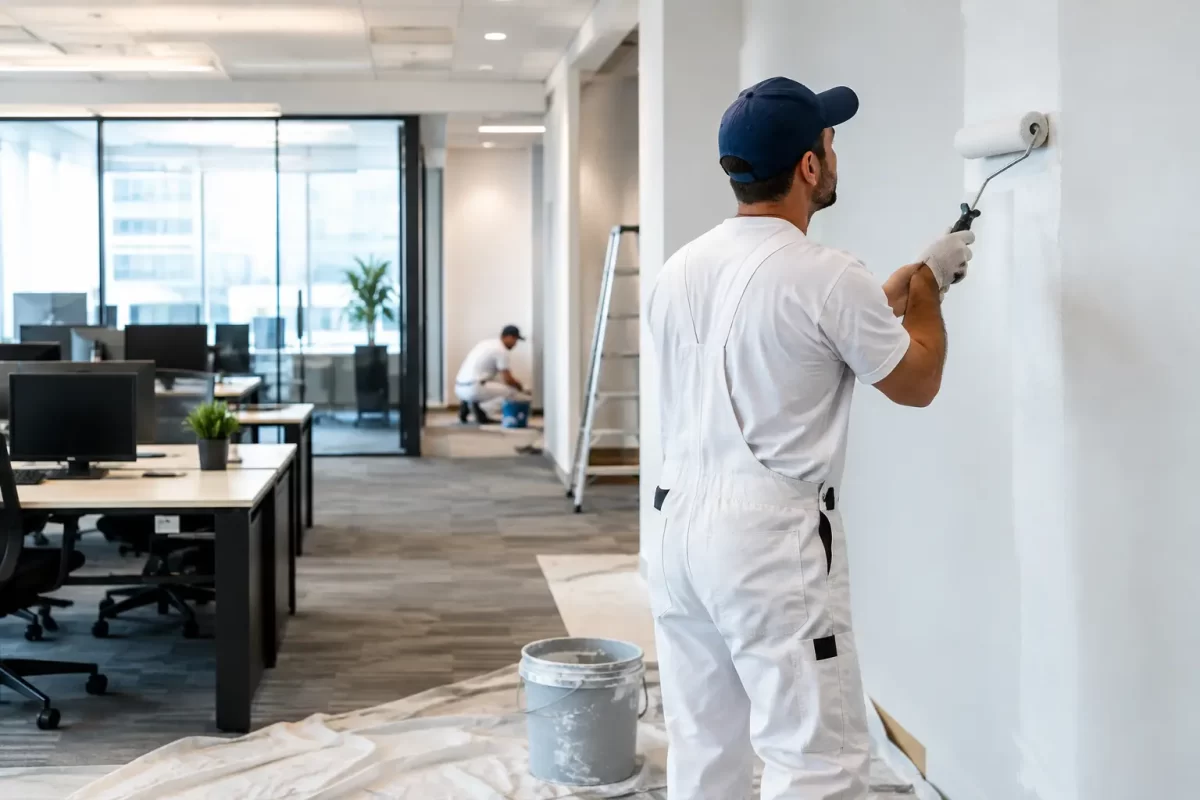
A fresh office can lift the way staff and clients feel about the business, but repainting cannot come at the cost of lost trading time or a disrupted workplace. To schedule occupied office painting well, the work needs to fit around the people using the space, the tasks they perform and the areas that cannot be out of action at the same time.
For Gold Coast and Tweed businesses, the best result is usually not the fastest possible job. It is a carefully planned project with clear access arrangements, realistic drying time and a painting team that respects a working environment.
Start with how your office actually operates
Before setting a date, look at the day-to-day rhythm of the office. A quiet professional practice may be able to paint meeting rooms during normal hours, while a busy reception, medical clinic or customer-facing showroom may need work completed after hours or over a weekend.
Consider where staff sit, when clients visit and which rooms are essential to daily operations. Reception counters, interview rooms, boardrooms, kitchens and amenities are often used differently, so they should not automatically be treated as one painting area. A staged plan keeps the business operating while the refresh takes place section by section.
It also helps to identify fixed dates early. Avoid painting immediately before an important presentation, audit, staff event or major client meeting. Allow a little breathing room after the final coat for touch-ups, furniture reset and a proper clean before the area returns to full use.
Schedule occupied office painting in workable stages
For most active workplaces, dividing the project into zones is the most practical approach. One area is prepared and painted while staff work from another part of the office, work remotely where possible or use a temporary desk arrangement. Once that zone is dry and ready, the team moves to the next.
The right stage size depends on the office layout and the number of people involved. Painting one room at a time gives the least disruption, although it can extend the overall programme. Closing a full wing or floor may complete the job sooner, but only works if the business has enough alternate space. The best choice depends on your deadline, available workspace and how much movement of staff and equipment is realistic.
A typical staged arrangement may include:
- reception and waiting areas completed after hours or on a weekend
- meeting rooms painted one at a time and temporarily removed from bookings
- open-plan workspaces completed in sections, with desks relocated in advance
- kitchens, corridors and amenities timed for quieter periods
A professional painter should talk through these details before work begins, rather than arriving with a one-size-fits-all plan.
Allow for preparation, not only painting time
The paint itself may be the visible part of the job, but preparation often determines the finish and the schedule. Walls may need cleaning, holes filled, cracks repaired, stains sealed or damaged plaster patched before a top coat can be applied.
If an office has old adhesive marks, scuffed corridors, peeling paint or previous water damage, allow additional time for repairs and drying. Rushing this stage can leave visible defects under a new coat and create more inconvenience later. It is better to assess surfaces properly at the quoting stage so there are fewer surprises once furniture has been moved.
Choose timing that protects productivity
After-hours painting is a sensible option for businesses with regular client traffic, phones that need answering and teams who cannot easily relocate. Evening work can keep disruption low, particularly for entry areas and shared spaces. Weekend work can be useful for larger stages, as it gives paint more time to dry before staff return.
That said, after-hours access is not always necessary. Smaller enclosed rooms can often be completed during business hours if access is controlled and the room is taken out of use. In some offices, a combination works best: preparatory work and low-impact painting during the day, with high-traffic areas completed outside normal hours.
Ventilation, drying conditions and the coating system all affect timing. Water-based low-odour paints are generally well suited to occupied interiors, but a responsible schedule still allows for drying and airing out. Your painter can recommend suitable products for the surfaces, traffic level and required finish, rather than selecting paint based on colour alone.
Give staff clear notice before work starts
Even a well-planned painting project can feel disruptive if people do not know what is happening. Staff should be told which areas are being painted, when access will change and what they need to remove from desks, shelves and cupboards. Clear communication avoids last-minute scrambling and protects personal items.
For a larger office, nominate one person from the business to coordinate with the painting team. This contact can confirm access, security procedures, parking, alarm requirements and any changes to the work schedule. They can also make quick decisions if an unexpected issue is found behind a filing cabinet or on a wall that was previously hidden.
Clients and visitors may need notice too. A simple sign at reception, an update in appointment reminders or temporary directions to an alternate entry can prevent confusion. The goal is not to draw attention to the works, but to make the experience feel organised.
Prepare the workplace for a clean result
Painters can protect floors, fixed furniture and nearby fittings, but the office team can make the process smoother by clearing movable items beforehand. Remove artwork, loose wall décor, desk accessories and paperwork from the work zone. Sensitive electronics and important files should be moved or securely covered as agreed.
Large furniture does not always need to leave the room. Often it can be moved to the centre and protected, provided there is enough room for safe access to the walls. However, crowded spaces can slow the job and make detailed preparation more difficult. If a room can be cleared fully, the finish is usually easier to achieve and the work can be completed more efficiently.
Access arrangements matter as well. Confirm where painters can park, how materials will be brought in, where ladders and equipment can be stored securely, and whether there are building management rules for lifts, loading bays or noise. These practical details are small, but they prevent lost time on the day.
Keep safety and security part of the plan
An occupied office needs more than drop sheets and paint tins. Walkways, emergency exits and shared access points must remain clear. Work areas should be separated where needed so staff and visitors are not walking under active preparation or around equipment.
Security is equally important. Discuss keys, swipe access, alarms and who will open and close the premises if work is taking place outside business hours. If the office handles private client information, arrange for documents and screens to be secured before painters arrive. A professional team will respect the workplace, but a clear site process gives everyone confidence.
Check each stage before reopening the area
Do not wait until the entire project is finished to inspect the work. At the end of each stage, check the agreed colour, coverage, edges, repaired areas and overall appearance in normal lighting. It is much easier to address a question while the team is still working in that zone than after desks and décor have been put back.
This is also the time to confirm that furniture can return safely and that the space is ready for staff. A quality painting job should leave the office looking refreshed, not leave your team with a long reset to manage.
For businesses that need reliable planning as well as a high-standard finish, Jag Painting Solutions can help arrange commercial painting around the way your office works. A clear site visit and detailed quote are the right place to start – before dates are locked in and staff calendars are affected.


