

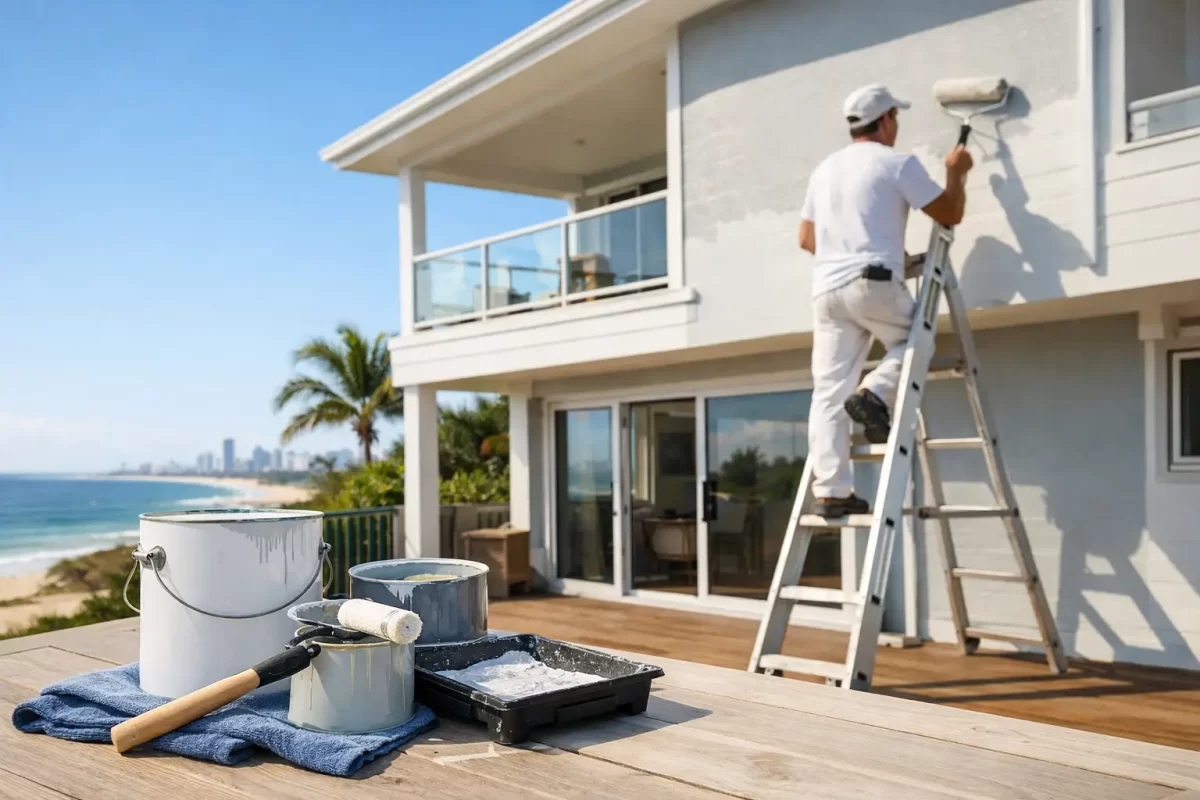
A faded wall is rarely just a colour problem. On Gold Coast homes, strong sun, salt in the air, summer storms and moisture can slowly break down paint, sealants and the surfaces underneath. A well-planned exterior house repainting guide starts with the condition of the home, not the colour chart. Getting that order right protects your property and gives the finished paintwork a much better chance of lasting.
For homeowners planning a refresh, repainting is also a good opportunity to deal with small defects before they become larger repair jobs. Cracked render, lifting paint, damaged timber and gaps around windows can all affect the finish if they are painted over rather than properly prepared.
Know when your exterior needs repainting
Paint does not need to be completely peeling before a repaint is worthwhile. Early action can prevent bare timber, masonry or metal from being exposed to the elements. Walk around the property in good daylight and look closely at walls, eaves, fascia boards, doors, window frames, fences and any rendered areas.
Common signs include chalky paint that leaves residue on your hand, fading on sun-facing walls, hairline cracks in render, bubbling or flaking coatings, mould staining and exposed patches where paint has worn away. Timber may show splitting, swelling or soft areas around joins. Metal surfaces can develop rust, particularly near the coast or around exposed fixings.
Some issues are cosmetic, while others point to moisture or substrate problems. For example, isolated peeling beneath a leaking gutter needs the water issue resolved first. Repainting over it may improve the appearance briefly, but the failure will return. A professional inspection is especially useful when there is widespread peeling, persistent mould, render cracking or suspected water damage.
Plan the job around weather and access
Exterior painting is heavily affected by weather. On the Gold Coast and in Tweed, rain, humidity and hot direct sun can make timing just as important as product selection. Paint needs a clean, dry surface and suitable conditions to cure as intended.
Avoid painting immediately after rain or pressure washing, even when the surface feels dry. Moisture can remain in timber, render and gaps around trim. Very hot surfaces can also cause paint to dry too quickly, reducing flow and adhesion. Experienced painters plan work around the forecast, start on suitable elevations and adjust the schedule when conditions are not right.
Access should be considered early as well. Two-storey walls, steep blocks, roofline fascia and areas above awnings may require ladders, scaffolding or other safe access equipment. This is not the place to take shortcuts. Safe access helps painters prepare every area properly and maintain a consistent finish from ground level to the upper storey.
Preparation determines the life of the paint
The quality of a repaint is decided long before the final coat goes on. Surface preparation takes time because every surface has a different condition, and the existing coating needs to be assessed before a new system is chosen.
A typical preparation process includes washing away dirt, salt, cobwebs, chalking paint and surface contaminants. Mould should be treated correctly rather than simply painted over. Loose or flaking paint is scraped back, rough edges are sanded, and bare areas are spot primed. Cracks, holes and gaps may need filling or flexible sealant, while damaged timber or deteriorated render may require repair before painting begins.
Not every house needs the same level of work. A relatively recent paint system in sound condition may only require cleaning, minor sanding and a compatible repaint. An older home with failing coatings can need far more extensive preparation. The difference affects both the quote and the durability of the result, which is why a clear site inspection matters.
Check the cause of cracking and peeling
Hairline cracks in render are common, but they should not be treated as all the same. Some are minor surface movement and can be prepared and coated appropriately. Wider or recurring cracks may indicate movement, moisture entry or an underlying repair issue that needs closer attention.
The same applies to peeling paint. If only one small area has failed, the cause may be a previous patch with poor adhesion. If paint is lifting across several elevations, there may be a broader issue with surface preparation, incompatible coatings or moisture. Repairing the cause before repainting is the practical approach, even if it adds time upfront.
Choose coatings for the surface, not just the shade
Exterior paint needs to suit the material it is applied to. Rendered masonry, weatherboards, fibre cement, timber trim, metal gates and eaves can each require different preparation, primers and topcoats. A single product is not automatically the best option for every part of the home.
For rendered walls, a quality exterior coating with good flexibility and weather resistance can help maintain an even finish over time. Timber needs a system that allows for movement while providing protection from sun and rain. Metal must be cleaned, treated for rust where required and primed with a suitable metal primer before topcoats are applied.
Colour also has a practical side. Deep colours can look striking, but they absorb more heat and may show fading, dust or surface imperfections more readily than lighter shades. Pale colours can make a home feel larger and suit coastal streetscapes, although very light finishes may show mould staining in damp, shaded areas. The best choice depends on the home’s style, the amount of direct sun, surrounding landscaping and how much ongoing maintenance you are comfortable with.
A colour consultation can save expensive second thoughts. Test sample colours on different sides of the house and view them in morning, midday and late-afternoon light. The same colour can appear noticeably different under bright sun, cloud cover or shade from neighbouring trees.
Protect the property before work begins
A professional exterior repaint should improve the home without creating unnecessary disruption around it. Before preparation starts, garden beds, paths, outdoor furniture, windows and nearby vehicles should be protected. Plants may need to be covered carefully or tied back temporarily, while painters need clear access around walls and gates.
It also helps to plan for practical details. Keep pets away from work areas, move outdoor items that could be affected by dust or overspray, and let painters know about delicate landscaping, sprinkler systems or access restrictions. If your property is tenanted or part of a commercial site, agree on work hours and access arrangements before the job begins.
Clean workmanship matters at the end of the project too. Rubbish, masking materials and paint containers should be removed, and the site should be left tidy. Respect for the property is part of the service, not an optional extra.
DIY or professional repainting?
A small, low-level wall or fence in good condition may be manageable for a confident DIY painter with the right tools and time. The trade-off is that exterior work is more demanding than it first appears. Cleaning, sanding, repairs, priming, weather delays and safe access can easily take longer than the painting itself.
Professional painters bring product knowledge, preparation methods, equipment and a trained eye for defects that may not be obvious at first glance. This is particularly valuable for multi-storey homes, extensive render repairs, weatherboard properties, heritage details or surfaces with ongoing peeling and moisture concerns.
When comparing quotes, look beyond the final figure. Ask what preparation is included, whether repairs and primers are allowed for, how areas will be protected, what coating system is proposed and how weather delays will be managed. A detailed quote gives you a clearer picture of the work being done and reduces the risk of unexpected compromises later.
Keep the finish looking its best
A repaint is not a set-and-forget job, especially in coastal conditions. Wash exterior surfaces periodically to remove salt, dust and organic growth. Keep gutters clear, trim plants back from walls and deal with leaks promptly. A quick yearly check around eaves, timber joins, window frames and shaded walls can help catch small issues before they affect larger areas.
If you are planning an exterior refresh, take the time to have the surfaces assessed before choosing colours. Jag Painting Solutions can provide a clear, no-pressure quote and practical guidance on the preparation and coating system that suits your home. The right repaint should do more than look fresh on handover day – it should leave you confident your property has been cared for properly.


